I have been reading three books recently, all of which have reminded me of something I knew perfectly well, but like so many others, had actually forgotten. Alongside the independence movement across Africa there was a flourishing of confident African writing, both literature and scholarship that began to have a significant impact well beyond Africa itself. When we talk about the decolonisation of our teaching then we often forget that this is a process that has been going on since the 1950s, 60s and 70s. The fact that we do have to continue to talk about decolonisation, however, shows just how little lasting impact this particular wave of African scholarship appears to have had.
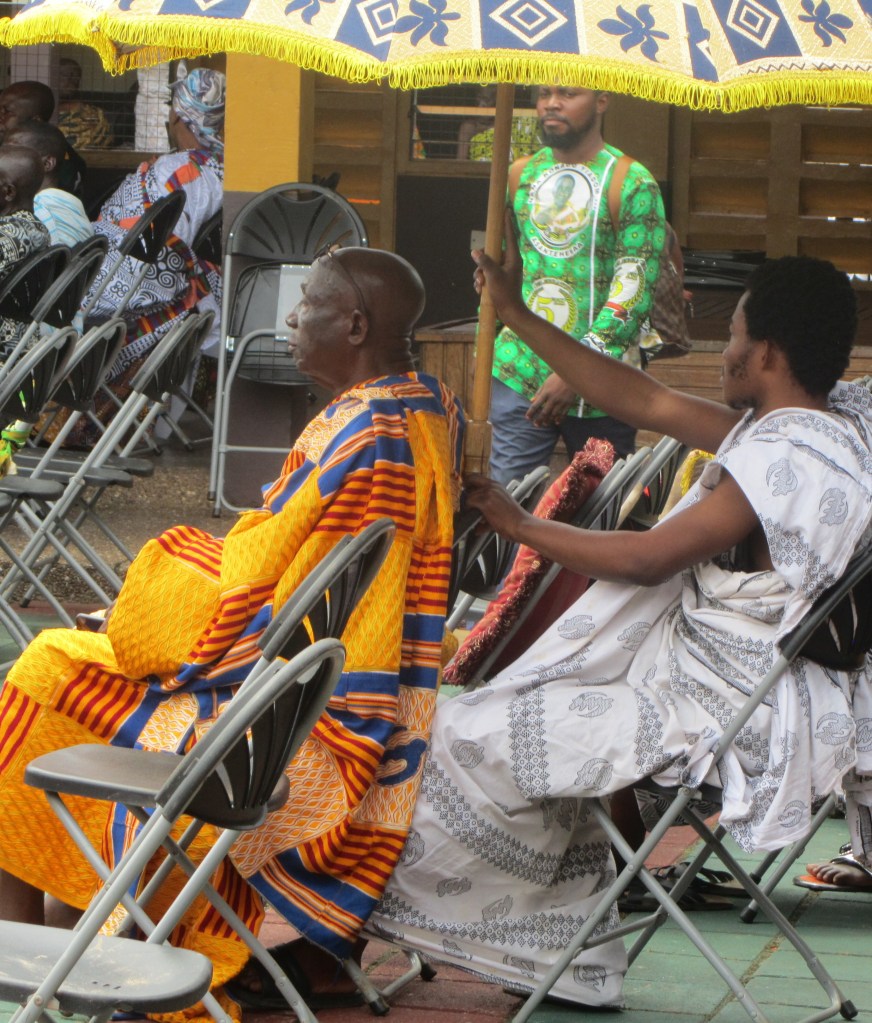
The most obvious book that picks this up, from the three that I have been reading, is Kwame Anthony Appiah’s In My Father’s House. This work is from a subsequent wave of African scholarship that began in the 1990s and Appiah, like so many African scholars writing at this time, was in a university in the States (others were in Europe, a few established in African universities). I turned to the book in part because Appiah was rooted in the life and culture of Kumasi in Ghana, where we travelled last autumn. Appiah’s father was a key figure in the independence movement and the early years of the independent government, and Appiah himself was a teenager at the time of independence. He is discussing the possibility of a pan-African position and, by implication, questioning the literature and scholarship produced at independence, where Ghanaian scholars were at the forefront of Pan-Africanism. Interestingly Appiah notes that colonialism had a marginal effect on many rural Africans, particularly in British controlled areas, and questions the Western expectation that all Africans should feel humiliated and scarred by colonialism. However, it is the diversity of African writing, and African approaches, rooted, as I say, in a very specific time and place, that forms the basis for his position.
The book that drew my attention more specifically to the confidence and visibility of African scholarship in the 1960s and 70s, and, incidentally, provided the most convincing argument for why we still have to talk about decolonisation, was Bénédicte Savoy’s Africa’s Struggle for Its Art. This is a very detailed account of the debates around restitution and the return of African art that developed following independence. We sometimes think (if we bother to think about it at all) that the restitution debate, and the demand for African art to be returned to its country of origin, is a recent phenomenon, associated with identity politics and Black Lives Matter. This is far from the case, and, as Savoy shows so very clearly, the call for the return of art, and other cultural artefacts, was one of the first acts of many independent African nations. For some, like Nigeria, this was led by the museums and was seen as ‘cultural’. For others, and Ghana is a very good example, it was a request for the regalia of kings and chiefs that had been taken as spoils of war.
Savoy is particularly interested in the European response to this request and looks at it primarily through a German lens, not least because the archives and records in Germany are so much more complete than in France or the UK. What Savoy demonstrates is not that the European museums constructed strong and convincing arguments against restitution. They struggled to come up with anything remotely convincing. Essentially what happened was that despite all the requests from Africa, and the subsequent debates and setting up of committees at UNESCO, the European museums simply stalled. They did nothing and, on the whole, refused to engage in the debate. Where they did engage, particularly once the press began to pick up the African nation’s cause, they deliberately misrepresented the request (only ever a request for a small number of key items) as the request for the total return of all items, from everywhere, and the emptying of the European museums. It was this stalling, and refusal to engage, demonstrating a level of arrogance if nothing else, that eventually led the African nations, and most others involved in the debate to give up in despair of ever seeing the results they were seeking. The debate simply fizzled out in the mid-1980s and was forgotten to such an extent that we think this is something new in the 2020s.
As with the debate about the restitution of art, I would suggest, so with much of the work in other areas of African scholarship, and the development of African culture (writing, art, music). The third book that I have read is Ekow Eshun’s catalogue for his exhibition at the Hayward Gallery, In the Black Fantastic. I was very sorry that I was not able to get down to London to see this exhibition, but the catalogue is a fascinating document in its own right. What this reminded me was that the growth of what is now known as Afrofuturism, which I have heard discussed in many different contexts recently, was a movement that emerged in the 1990s. Once again, however, we can see a pattern of movements, intellectual and artistic, that are referenced in Eshun’s text. There was a flourishing in the 1920s and 30s (mainly in Paris, partly in New York, and this is the work I am most familiar with), a resurgence in the 1960s and 70s (that Appiah is discussing), a further wave in the 1990s (including Appiah and his colleagues and Afrofuturism) and then we might perhaps be seeing another significant flourishing in the 2020s. In each case (we cannot talk about the last just now) the emergence of black scholarship, or art, or literature, is feted at the time and treated as something ‘exotic’ and new. However, as with the debate about restitution, the response from the European and American mainstream was muted to say the least, and often simply ignored, or failed to give any real space, to this black scholarship and so it dies out and is largely forgotten (apart from those in the know).
One of the things that struck me on reading Appiah’s work was that while he focused on the role of intellectuals and novelists, he largely ignored the place of artists and musicians. Eshun rebalances this to some extent in his emphasis on the visual arts, and he also recognises the importance of some popular musicians, such as Sun Ra, in the development of the arts, and includes many album covers as examples of the Black Fantastic in art. There is also a brief reference to film in both Appiah’s and especially in Eshun’s accounts and this is something I know very little about. In the capitals of Africa, however, and other major cities, there was through this period, and especially since the 1960s, a flourishing on popular music. This addressed many of the issues of the intellectuals and the artists, novelists etc., even if the medium was very different. This body of work also reached a much wider audience within Africa, and perhaps among black populations beyond Africa, than the academic or literary work ever managed. I think it would be important to include this in any reflection on the development of African thinking and expression in the 1960s/70s, the 1990s or in the contemporary world.
 Martin Stringer Quartet