Atheism has been around for many centuries. The early Christians were accused of being ‘atheists’ because they did not believe in the gods of the Greek and Roman world. Atheism as we know it today, however, as a rejection of all that is supernatural or non-empirical, is largely a product of the nineteenth century (with roots going back into the age of enlightenment at the end of the eighteenth century). It is often associated with the development of science as an empirical discipline and the growth of rationalism as a way of thinking. Many of the main theorists of religion and culture in the mid-nineteenth century – Comte, Frazer, Tylor, Weber, even Marx – associate the decline of religion with the growth of rationalism and many of them link atheism proper (a rejection of God) with a wider rejection of anything that might be considered superstitious, irrational, non-empirical or supernatural. In their terms this is a rejection of all that is not ‘real’.
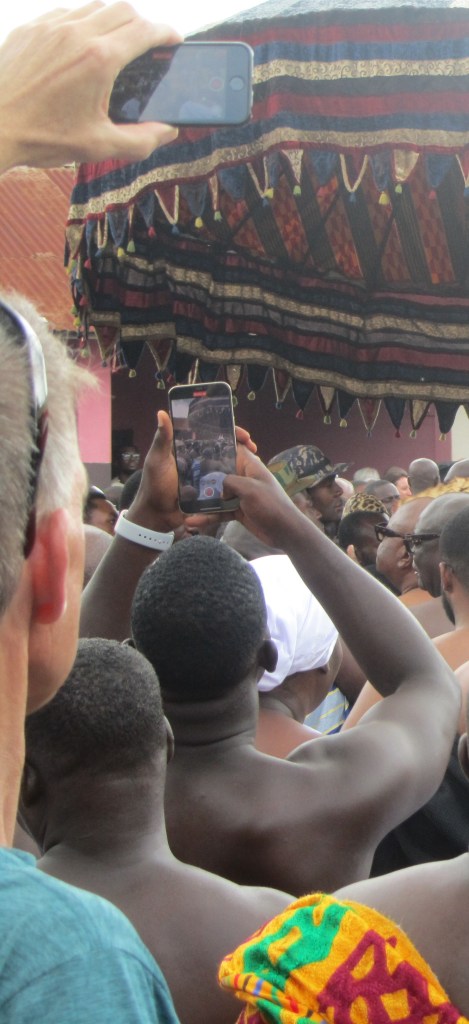
I am currently reading a recent text on the place of photography in the museums and scholarship related to ethnography in France from 1930-1950. This may not seem an obvious starting point for a discussion of atheism in the nineteenth century, but the introductory remarks within the book, about the development of photography and its impact on ethnography at the turn of the twentieth century led me to ask whether there might, in fact, have been a relationship between the growth of photography in the nineteenth century and the particular form that atheism took among the intellectual elite of that time. It was largely those who were writing on religion and culture, and those they associated with, who were at the forefront of the development of photography. Could there, therefore, be some kind of link.
Others will know this field much better than me, but there is surely some relationship between the growth of a medium that was seen to capture, in a mechanical form, only that which was in front of it, and an understanding of what might be considered ‘real’ and what might not. Before the photograph it was never possible to say that a person who had seen a ghost, or met fairies at the bottom of their garden, or the forces of evil, or whatever, was lying. We might not have seen such things, we might not be able to see such things, but could we ever convincingly say that they were not there, and not visible to those who can see them? When we recognise that many people across the world still live within a world that is populated by spirits and other creatures that cannot normally be seen (but which are clearly visible in certain contexts to certain people) then the oddness of our own position, which largely claims that such things simply do not exist, becomes particularly stark.
However, if we have a machine, a mechanism that allows us to see what is ‘really’ there, then that is evidence that cannot be ignored. The impact of technologies of seeing and of observation are very important to science, but they have also had a significant impact on the daily lives of the people who have come to accept, and to live, with such technologies. A camera is defined, in some ways, as a technology for capturing the visual, that which is physically in front of it. This is not true of any form of painting or printing, and it is the lack of human intervention that made this possible, or at least made the reality/validity of the image apparent to those who were observing the process.
It is no surprise that there were attempts, largely towards to end of the nineteenth century, to photograph the spiritual, or the non-empirical. The images were believed, people wanted to see them as a photograph, that is as a real representation of what was in front of the camera, and they circulated very widely throughout society. The Cottesloe Fairies are a classic example, as are the various images of plasma and other phenomena associated with seances. Arthur Conan-Doyle was a great advocate of such images and saw them as proof of the existence of what it was that they purported to show. Over time, however, such images were dismissed as fakes and eventually the mechanism of their creation was uncovered. At the same time the range of phenomena that could be captured by the camera became fixed and, more importantly, that which could not was dismissed as unreal, as simply not existing.
It is this wider sense of the radically empirical, as espoused by many of the great thinkers of the nineteenth century, that I would suggest was a product of the camera, and other technologies of seeing. If it cannot be photographed, then it cannot be real, and if it cannot be real then it does not exist, end of story. So, the question raised by so many of these early thinkers about religion and culture is how is it that so many people from across the world claim to believe in, and claim to see and engage with, that which is so patently unreal (because it cannot be captured on camera)? I have struggled to find a term for what it is that these theorists reject, and yet is still claimed by a very large majority of the human population. ‘Non-empirical’, my chosen term, is far from satisfactory, but I am not sure that ‘non-photographable’ is any better, although it may be more accurate for what I am talking about.
Deep fakes and other forms of digital manipulation of images may well have challenged some of a certainty about the truth of the image, when that is created mechanically or in certain forms of the digital, but it has not fundamentally changed what has become common across Western society: that what is not photographable does not, and cannot, exist. I am not sure about this, and we should, perhaps ‘must’, change some of our assumptions, but it is very difficult to change our perception of reality, and that, I fear, has been changed irretrievably by the camera and the images it produces.
 Martin Stringer Quartet