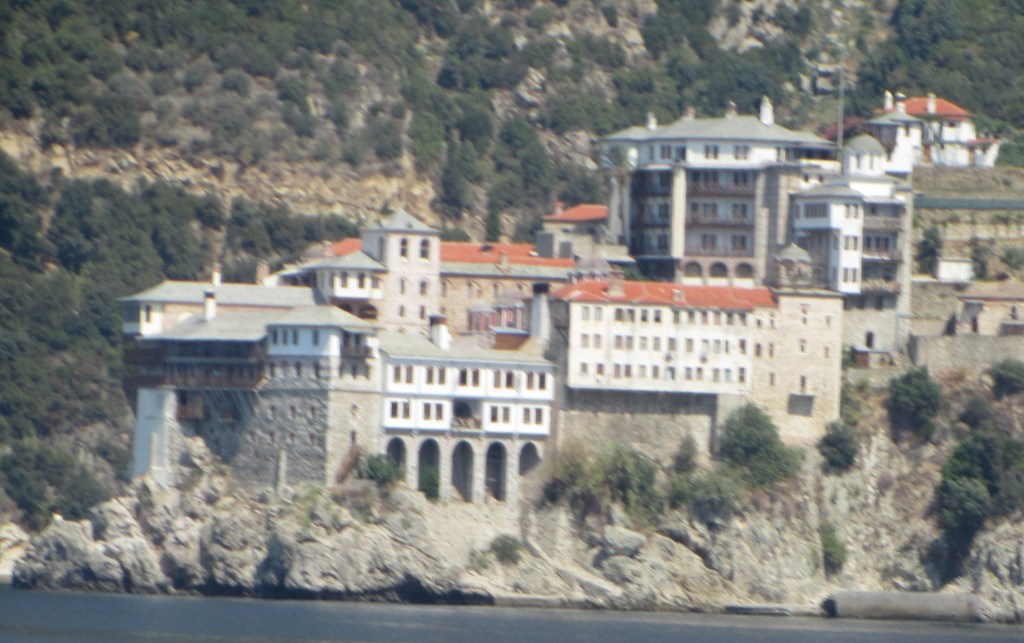
I have just finished reading William Dalrymple’s From the Holy Mountain. I have to say that it was one of the most depressing books that I have read in a long time. The book outlines Dalrymple’s journey from Mount Athos through Turkey, Syria, Lebanon, Israel and Egypt to the Coptic necropolis of Bagawat in the southern Egyptian desert. Dalrymple is drawing inspiration from The Spiritual Meadow of John Moschos. This was written in the late sixth century and early seventh century, at the height of the Byzantine Empire, and just before the rapid growth of Islam. It is, among other things, an account of Moschos’ travels and his visits to various monasteries across the region. It is these monasteries that Dalrymple sets out to visit.
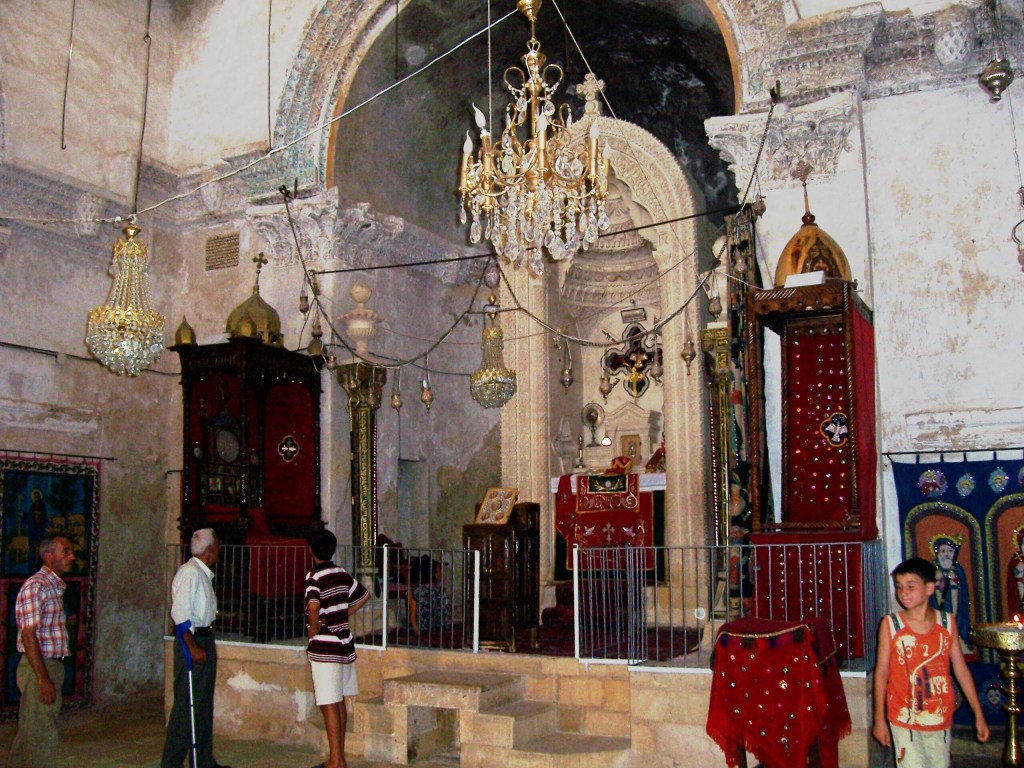
What is very clear, however, is that, apart from Athos, where Dalrymple starts his journey, the Christian communities he visits are under existential threat and persecution. The people, unable to survive in their native lands, are rapidly emigrating to the US, Canada and Sweden, among other places. The ancient Christian communities across the Middle East are dying out. Dalrymple travelled in the early 1990s, and he consistently predicts that within twenty years there will be no Christians left in the countries that he visited.
Dalrymple recounts many stories of horror, of violence, of naked persecution and of despair. What is interesting, however, is that in each country the troubles faced by the Christians come from different sources, whether it is from nationalists (primarily Kurds, but also Turks) in southern Turkey, Jewish settlers in Israel, or Islamic extremists in Egypt. In the Lebanon it is even other Christians who are the primary cause of the persecution and violence. Only in Syria are the Christian communities relatively safe and thriving, although we all know only too well what has happened there in more recent years. Twenty years on, now thirty years on, some, very small, Christian communities are still struggling to survive, but I would doubt whether many of the monasteries that Dalrymple visited are still open, even in the very limited way they were in the 1990s.
It is not just the contemporary oppression of the Christian communities that Dalrymple articulates. His narrative puts this into an historical context and demonstrates, across the region, how the downfall of the Ottoman Empire (under which, for five centuries or so, the Christians had been tolerated and allowed to live and worship in relative freedom), and the outcomes of the First World War, colonialism and the establishment of the State of Israel, with all the errors and mistakes that were made by Britain and France, and others, across the region, it was always the Christians who suffered and, as nationalisms grew, it was the Christians who were expelled, or destroyed in one genocidal massacre or another.
While those perpetuating the horrors that Dalrymple relates are almost always local, he clearly places the blame firmly on the Western powers and their actions, both in the past and in the present. The drive to ethnic unity, nationalism, religious purity, or whatever it might be, has led to Christian communities being forcibly expelled from the lands in which Christianity had its birth, but that drive has its roots in the actions, and decisions of Britain and France and other Western nations. All this was happening, and continues to happen, with the full knowledge of Western governments, but with hardly any significant comment or condemnation on their behalf.
One of the points that Dalrymple wishes to emphasise is the common origins, in a local Semitic culture, of Christianity, Islam and Judaism. Over and over again Dalrymple compares a particular Syriac or Coptic Christian practice with what we usually associate as Islamic practice, showing the very close similarities between the two. The keeping of the times of prayer, fasting, the actions of prayer, the call to prayer and so on. It is the common heritage that Dalrymple highlights, and it is this, in his view, that makes the current oppression of the Christian communities, and their expulsion from their native lands, all the more devastating. In many places Christian and Muslims shared common traditions, healing rites associated with particular shrines for example, and common spaces where both Muslims and Christians worshiped, together, but in their own way.
Added to this is the way in which, in Turkey and in Israel particularly, it is not just the communities that are being oppressed. The material remains, the monasteries, the churches and other monuments, are also being systematically obliterated. It is the memory that is being destroyed, all evidence that there ever was a strong and thriving Christian community in these places. This a cultural vandalism that Dalrymple finds to be particularly devastating and one that has the potential to destroy much of the cultural remains and art of the late Byzantine period across the region. It did not stop in the 1990s of course. The destruction, of both communities and peoples, has continued with the civil wars in Iraq and Syria (still a small beacon of hope in Dalrymple’s book) and the continued oppression of minority religions in Iran. The Christian communities of the whole region are now, very obviously, hanging on by a thread. History and heritage are being lost and the people are moving away in ever increasing numbers.
Ironically, I was reading Dalrymple’s book as I was also reading the Book of Joshua for my daily bible reading. Joshua tells the story of the people of Israel taking possession of the land that God had promised them. What becomes very telling, particularly in the light of Dalrymple’s text, is the constant refrain, throughout Joshua, of God telling the people to destroy each city and all its people, not one is to be saved, not even the women or children. God is demanding total extinction, absolute ethnic cleansing. It is against this background, this ancient ideology (not just for the people of Israel, but for all peoples of the region) that I was reading about the destruction of the Christian communities. Has anything significant changed in the three or four thousand years between these texts? I fear not, and that it perhaps the most depressing element of all.
 Martin Stringer Quartet
Joshua, of God telling the people to destroy each city and all its people, not one is to be saved, not even the women or children. God is demanding total extinction,
Gosh haven’t picked up that remark but Yes even after 3 thousand years
LikeLike