Walking in Paris is a very different experience from walking in London. Above all there is less obvious difference and contrast within Paris, or at least within the centre of Paris. Normally, I would travel by Metro, but on my last trip, to visit the exhibition of a sale of some of Hélène Leloup’s collection of African, or more particularly Dogon, art, I had arranged the flights so that I would effectively have two full days in the city, and the exhibition (along with others at Christie’s and the Paris auction houses at Drouot) would not take all that time. What is more, until the last hour or so of the second day it was beautiful weather and ideal for just a gentle wander through the streets, not exactly springtime, but pleasant enough all the same.
When we usually visit Paris, it is to attend Parcours des Mondes (the annual exhibition of non-European art held among the galleries of Saint Germain des Prés in September each year) and we stay in a hotel in the Latin Quarter. On this occasion, because of the late decision to go and see the exhibition (I really couldn’t miss it given Leloup’s central position in the writing on the Dogon) our usual hotel was full, and I booked into a hotel not far from Sotherby’s who were hosting the sale, on the Boulevard Haussmann.
However, from the airport I got the RER down to St Michel and toured the galleries of St Germain before heading across the river, through the Jardin des Tuileries and on to the Rue Saint Honoré, at the end of which, opposite the Palais de l’Élysée, Sotherby’s has it’s Paris offices. Then, after lunch at a street corner café, it was on to the hotel (and some shopping at Printemps). The following day I explored the area around the hotel, the Parc Monceau, a couple of musées on its edge, and then down to Christie’s just off the Champs Élysée, back to Sotherby’s for a second look, and on, via the Madelaine to Rue Drouot, some exploring of that area, and back to the hotel via the Musée Gustave Moreau and the Eglise de la Saint Trinité, before walking from the hotel, down the length of the Rue Saint Honoré to Les Halles and the train back to the airport (it was on this last stretch that the heavens opened and I had to shelter in the perfume and candle shop Diptyque).
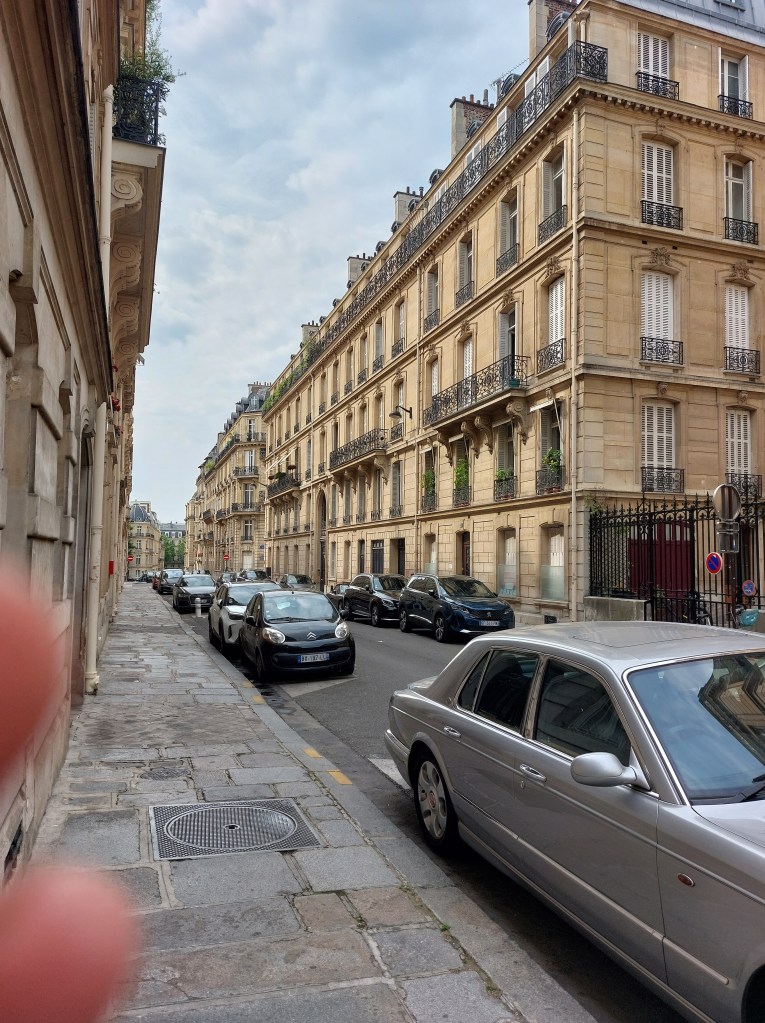
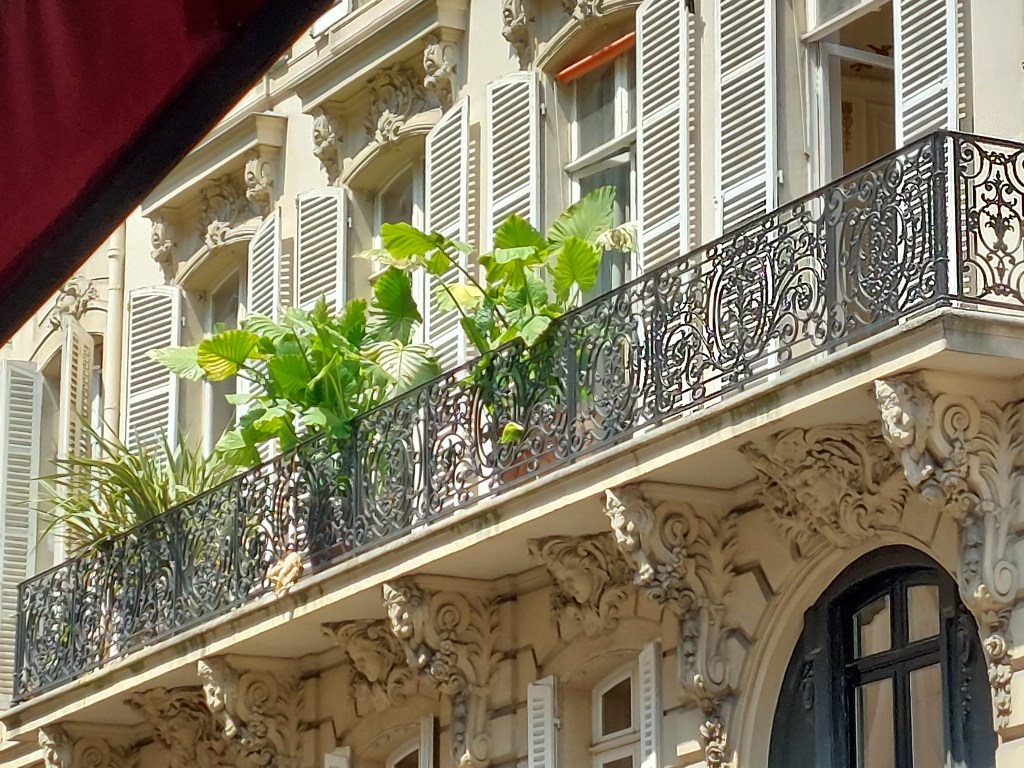
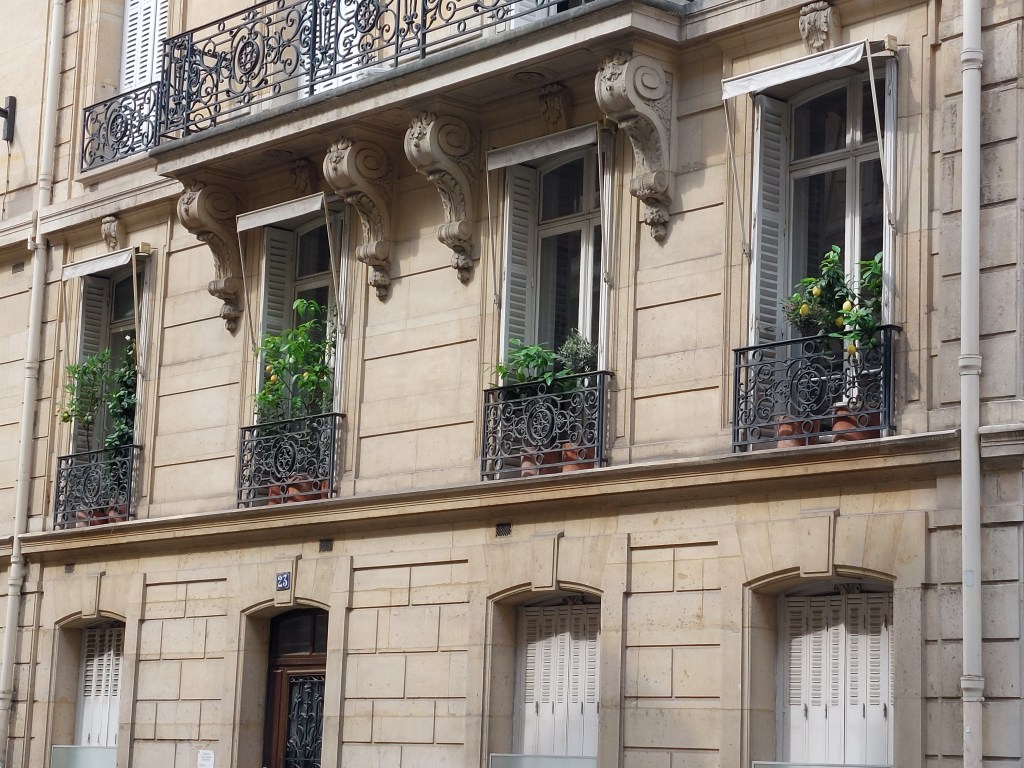
Wherever you walk in this central area of Paris you are surrounded by multi story stone houses, of differing styles, but all of a similar size and grandeur. Of course, what happens at ground level does vary, especially in shopping areas or in the occasional street set aside to cater for tourists and filled with cafés and other food outlets. Before reading Edmund de Waal’s The Hare with the Amber Eyes I had assumed, without really thinking, that these were all either offices or flats. It has not occurred to me that many were single mansions owned by individual families. Perhaps in some parts that was never the case. It was in the area around the Parc Monceau, where I was wandering on the second morning, that the house that is mentioned in de Waal’s book is situated, and it was clearly a place where numerous wealthy families lived. Three of the mansions are now museums and I visited two on this trip (we had been to the third on our last visit). This gives a very different insight into what otherwise seem very impersonal blocks of stone clad buildings, each fronting directly onto the street with no gardens to speak of (but just look up, and the joy of seeing large plants, including lemon trees, growing on the balconies above gives a splash of colour even to the most monochrome of these streets).
It is, however, at street level, and perhaps with the people, that the real variety is seen. The galleries and cafés of Saint Germain des Prés, the designer outlets, and designer people, of the Rue Saint Honoré and the much more earthy and human communities around Rue Drouot, leading up to Montmartre. Equally significant are the views. Haussmann, in designing the street plan, was very keen to encourage long streets, at different angles, that lead to vistas and points of view across the city. To turn a corner and then to see the road laid out, often with a monument or church in the far distance, is one of the great pleasures of walking around Paris.
Paris is a city of revolutions and of riots, as we have seen only to clearly in recent weeks. The divisions of wealth, of race, of society are as strong as in any city anywhere in the world. They are just not so obvious on the streets in the centre, except at times of trouble and protest. Paris has always been for me, despite all this, a very human city. Perhaps the riots, the violence, the open expressions of naked emotion, are part of that humanity. There is nothing that is false, or in the English sense ‘polite’ about Paris (although I have always found the people welcoming and seldom rude, as their reputation so often suggests). The scale is also not immediately human, but the repetitions, the long-repeated avenues, the stone clad buildings, all subtle variations of each other, are, in some strange way, human. It is also the cafés, tables and chairs on practically every corner, the simplicity of the fare, the buzz of people sitting, stopping, eating, drinking, that is human. I feel comfortable, relaxed, able to merge into the background. It is a real pleasure to walk around the city and watch its people going about their business.
Needless to say, I did not buy anything at any of the auctions. The prices were far too high for me. I simply wanted to go and to see what was there, and how they were presented. It is, of course, possible to do this online, but that is not the same. To be able to look at the objects themselves, objects that had been handled by Hélène Leloup, objects that had been made, and used, by the Dogon, was an incredible privilege, and well worth taking a couple of days in Paris.
 Martin Stringer Quartet