My partner and I have been passionate about Armenia for many years. We love Armenian music, Armenian art and architecture, the romance of the Armenian church, everything about Armenia, its history and its people. It is with great sadness therefore that we have been watching the news over the last week or so and seeing that, once again, the Armenian people are suffering and nobody, or practically nobody, is coming to their aid.
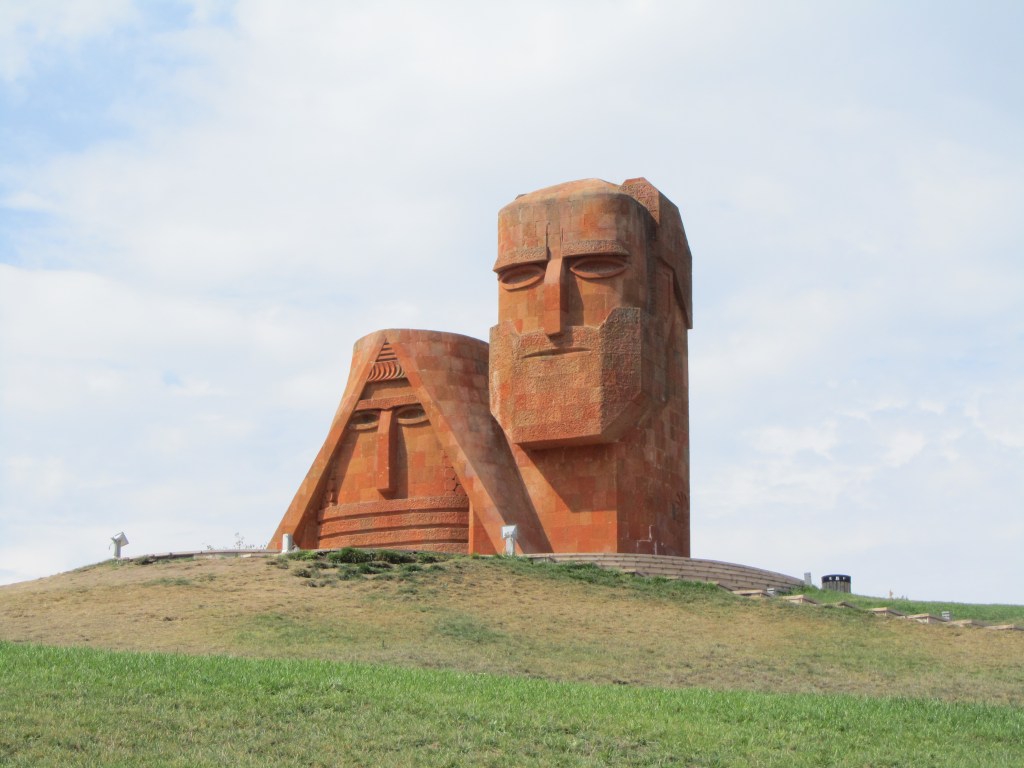
We have travelled to Armenia on two occasions, and twice to parts of eastern Turkey that have strong Armenian links. On our first trip to Armenia we travelled on to Georgia and I was very struck by the fact that all the stories we heard in Armenia were tinged with tragedy, not just over the last hundred years, but throughout its history, while those told in Georgia were stories infused with joy, if not directly with comedy.
The Armenian genocide, commemorated in a wonderful museum and monument in the heart of Yerevan is a moving and defining narrative for all Armenians. A whole population being slaughtered and driven out of their homelands in what is now Turkey, with many hundreds of thousands dying on the way. The current movement of people from Nagorno Karabakh holds memories of the genocide, but thankfully with far fewer casualties. I guess we can be thankful, even for small mercies.

A friend of ours lives in Gori, down by the border with Azerbaijan, and in the previous war he was very aware of the closeness of Azeri forces, the bombing and the shelling. That was a tense time, especially in his concern for his elderly mother and whether he would have a house to return to. Now the town is overrun with refugees, and everybody is welcoming strangers into their houses, doing what they can to support those fleeing from the aftermath of this most recent war.
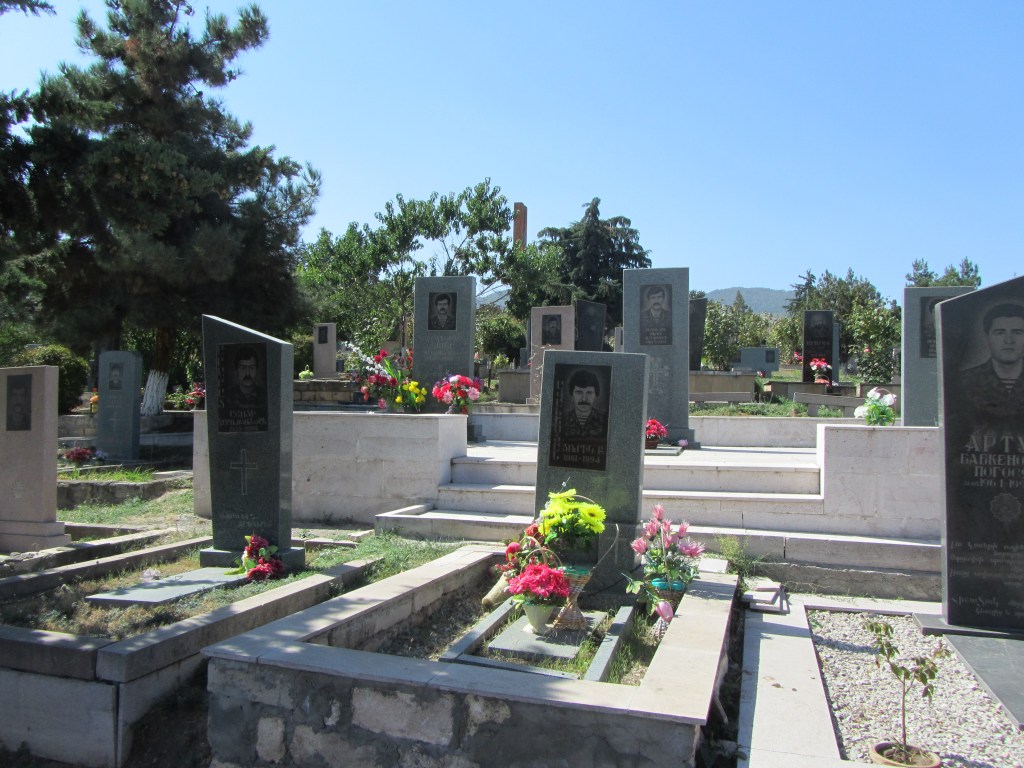
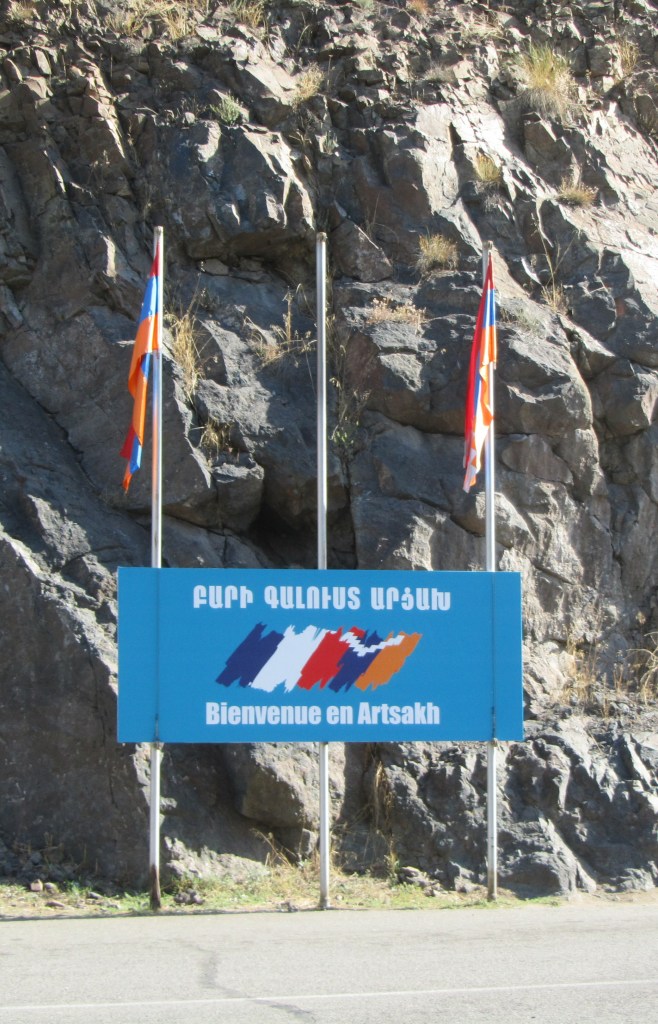
On our second visit we travelled over into Nagorno Karabakh, or Artsakh as it is known to Armenians. The lasting memories for me were to look out over the border into Azerbaijan and see a town abandoned on the border, and also to visit the graveyard in the capital, Stepanakert, and see that all the graves of the soldiers, each with a picture of the man who had been killed, and to note that they were all much the same age as myself. That was very sobering, as was the daily reports of soldiers being wounded or dying in clashes on the boarder that never really ceased.
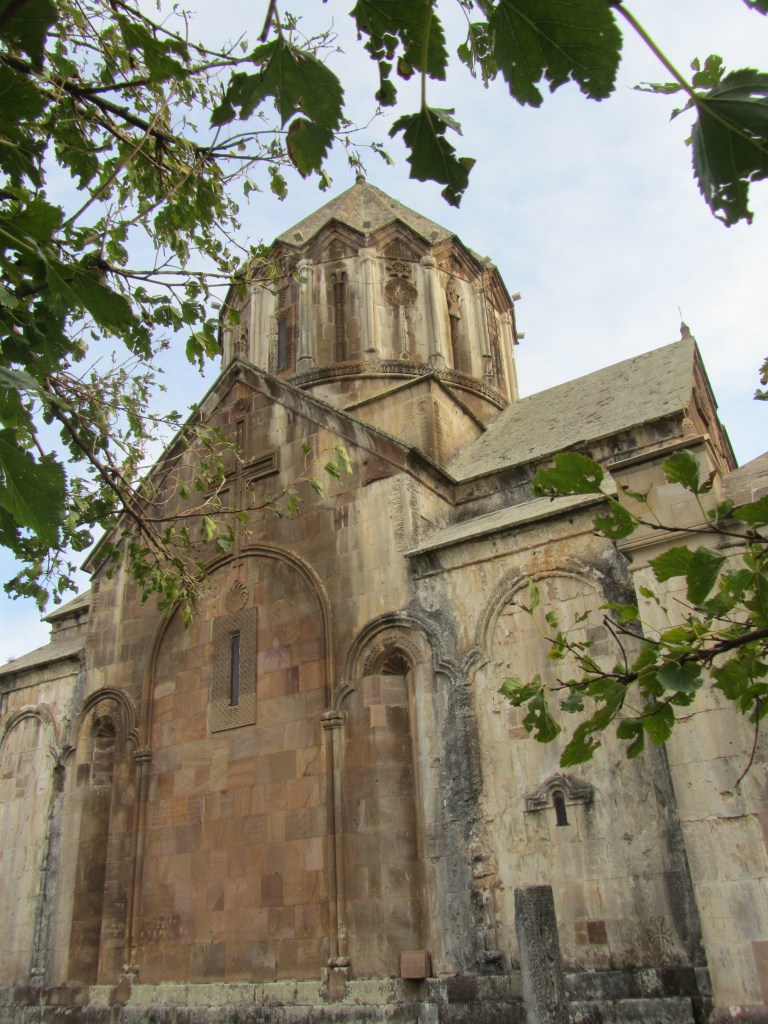
The land, however, is not just a series of villages and farms. We also visited ruins and monasteries that told of many centuries of Armenian history. I am sure that there are other monuments that tell of the histories of others who have lived on that land. Under the USSR there was a mixed population, neither completely Armenian, nor completely Azeri. In the war that followed the demise of the USSR, with Turkey supporting Azeri troops and the Russians backing Armenia, the process of ethnic separation, and ethnic cleansing was begun, each side calling on the doctrine of self determination to claim the land for their own people.
The Armenians predominated in that first conflict and, with the aid of Russian peacekeepers, the Armenian population of Nagorno Karabakh sought to develop their own republic, to practice self-determination. That was only ever going to be possible, however, with the tacit support of Russia. Turkey backed Azerbaijan and armed them in the most recent attacks. And now Russia, partly because of the distraction of Ukraine, partly because Armenian politicians have looked to the west and have had the courage to condemn Russia, but also partly because Russia is seeking to curry favour with Azerbaijan, the support and the protection that had been offered by Russian troops has disappeared.
As so often before in their history, therefore, the Armenians have become the pawns in much larger political movements, and have suffered as a consequence. There have been times in their two to three thousand year history when they were dominant in the area, if only for short periods. However, like all the other peoples of the region their lands have been fought over by larger empires, and despite brief periods of ever hopeful independence and self-determination, they have generally been crushed once again, so leading to their deep-rooted sense of tragedy.
Tragedy, however, does not mean lack of hope. Armenians have spread across the world, and we have attended churches in Manchester, London, Paris, Thessaloniki and New York. They have a strong sense of identity and great hope for the future. Events such as those of the last week or so, however, can do nothing to lift the mood of tragedy and sadness that is such a significant part of their history. Our most recent visit to Armenia coincided with the centenary of the genocide in 1915 and I always recall the text that accompanied the logo for the centenary ‘I remember and demand’.
 Martin Stringer Quartet