Reflecting on the local elections last week I have felt – for the first time in my adult life, that is since the late nineteen seventies – the need for an analysis based on class. What might we mean by ‘class’ in 2025? It will be very different from the structures of class smashed by Thatcher in 1979. It is class, however, employment status, economic outlook, values, worldview, that, for me, makes most sense of the new order revealed in last Thursday’s elections. This cuts across any other residual identities that have, perhaps, been more important in the last fifty years. Once again, I would argue, the class that we belong to, or the class that we identify with, is more significant in determining our voting patterns than any other factor.
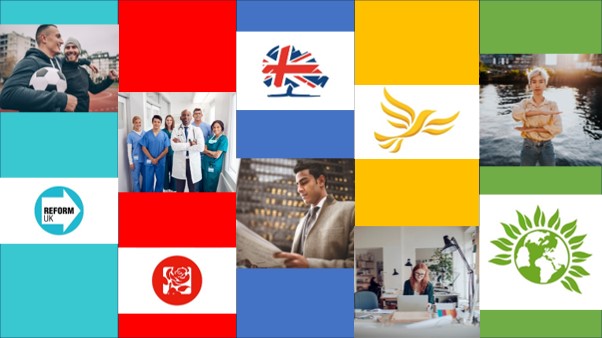
I would suggest that in 2025 there are five dominant classes, and two residual classes.
Tribal, Collectivist, Pro-Worker
This is the traditional working class that Labour have lost, and Reform has courted, and, perhaps I might say, re-created. These are people with lower paid jobs, many of which are highly skilled. They value the collectivism of work, shared values with fellow workers, and have pride in both their work/skills and in their country. I describe them as tribal. For many that is xenophobic (which is probably more accurate today than racist), and they want to see an ‘England First’ economic policy, supporting English industry (power, steel, manufacturing, farming). They are anti big government and distrustful of state institutions that are seen as wasting taxpayer’s money and working in other people’s interests. They are generally less well educated, but more importantly, they do not see any intrinsic value in education and tend to shun it. They vote Reform and are generally pro-Trump (not necessarily ultra-right wing or fascist). It is worth noting, however, that the leaders of this party may not (as always in the past with worker’s parties) be of this class, they simply pretend to share the values of this class.
Social, Professional, Democratic
This group are the teachers, the health workers, the social services, those who are essentially committed to the idea of shared values, redistribution of wealth through taxes, the rule of law and the idea of ‘society’. Their outlook is social rather than individual and they believe in the state supporting their citizens irrespective of income or social background. Many in this group are well educated and place a high value on education although they would never describe themselves as among the educational elite. In international relations they believe in the co-operation between states, the advocacy of democracy and the importance of international institutions such as the UN and all its various offshoots. They are strong supporters of the welfare state and find the individualism of all the other classes (including the pro-workers above) distasteful. They are usually pro equality, diversity and inclusion, but often see it in an intellectual or bureaucratic fashion. These have become the core Labour voters, although the bulk of this group, and many in the Labour party, believe that Labour should be supporting the more traditional ‘workers’.
Entrepreneurial, Managerial, Corporate
Both the traditional self-employed, or self-made, and the managers of larger companies come into this group. There is a strong emphasis on the individual, on hard work and on the ability to succeed. The values are those of the corporate world: brand identity, loyalty, company first, often transferred to the state, so essentially patriotic. They believe in low taxes, small government, the limiting of legislation, and yet they also recognise the value and importance of legal protections and can end up being very bureaucratic, multiplying legislation to protect their own (business) interests and to create a ‘level playing field’. They have more faith in insurance than welfare and tend to have access to private health care and private education. They do, however, see the need for, and value, a safety net for the ‘poor’. Their international outlook is not dissimilar to the professionals, placing a strong emphasis on the international order and collaboration between states. There is a recognition of the importance of international treaties and organisations, but only if subordinate to the nation states and if they are committed to the interests of those in this managerial group. They are also the traditional Conservative voters and may continue to vote Conservative. However, their world is shrinking as international business is being taken over by the tech giants with very different values and working practices.
Liberal, Inclusivist, Internationalists
I am using liberal here in both of its traditional senses. There is a strong commitment to liberty and individualism, especially when it comes to economics, but also to equality, diversity and inclusivity, welcoming everybody irrespective of background. These are people who we might think are self-made, dominating tech and internet-based companies of all sizes, from the small creatives to the large multi-national and multi-billion-dollar outfits. However, few of these people are ‘self-made’ and there is often independent wealth in the background, whether from family or previous work in the financial sector or law. Effectively, they are wealthy enough not to have to worry about questions of equality, social mobility or even, perhaps, government, although they are fully committed to all three. They are, above all, internationalist in outlook, citizens of the world, with a strong commitment to free movement, free flows of wealth and the downplaying of national identities (their families are often very mobile and living in many different countries). This group is also highly educated, I might even say the educated elite, even if individuals may have ‘dropped out’ of education and returned. This is the prosecco drinking crowd that we are told is now voting Liberal Democrat.
I would add two other groups to this classification: The Radical Idealists who are committed to causes, most importantly global warming and other climate related issues, but who also take proactive, often disruptive, action for other causes. They could come from any of the classes above but tend to be younger and reject the whole class-based analysis, and they vote Green. Finally, there are the Excluded and Disenfranchised, probably a sizeable proportion of the electorate but, despite some from the professional and liberal groups claiming to advocate on their behalf, they are highly unlikely to vote and have no party to support their interests.
How these groups are distributed in English society (this analysis does not work for Scotland, Wales or Northern Ireland) can be seen very clearly in the voting patterns in last Thursday’s election. How well the groups are prepared to work together to form a working administration is, however, a very different question and one that might be particularly important if the voting patterns we saw this week are reflected in the next general election.
 Martin Stringer Quartet