When I was much younger, merely a child, I collected lions. They might be small sculptures, toys, pictures, whatever. It was one of those things that meant that my many aunts never had to decide what to buy me for Christmas, or a birthday. They simply found a lion, or sent me a card with a lion on it. I lost the collection a long time ago. I also spent some time just looking up all the different words for lion (probably not as many as I had thought) in different languages. I had always thought that should I ever have a son (never high on my list of priorities) I would call him Leo, or perhaps Simba (the Kiswahili word for lion).
It was with real interest, and curiosity, therefore, that I heard that our new Pope had chosen the name Leo: Leo XIV. There has, of course, already been much written on this choice and what it might mean. Pope Leo himself has drawn attention to Leo XIII, the Pope at the end of the nineteenth century who challenged the capitalism of his day and supported labour movements and the plight of the those excluded by the industrial revolution. We are now entering what has been called the fourth industrial revolution, one driven by AI. As with all changes in social and economic structures there will be winner and losers, and Pope Leo XIV is very firmly placing himself on the side of the losers, those who will be alienated and disenfranchised by this new industrial revolution.
There were, however, twelve other Leos who have held the position of Pope, and like any relatively random selection of Popes from history they were probably a very mixed bunch. Leo XIV does also reference the first Leo, Pope in the middle of the fifth century. He, among other things, reached out to Attila the Hun who was marching on Rome. Here we see the peace-making theme, something that has already been an important, and necessary, part of Leo XIV’s early sermons and statements. Leo I was also known as Leo the Great, the first Pope to be given ‘the great’ as an addition to his name. What that might say for the current Leo I am not so sure.
As a liturgist my reference here is to the so-called Leonine Sacramentary, one of the earliest documents in the development of the Roman liturgy. It is a series of prayers for use at the mass and was almost certainly not compiled by Leo the Great, although some of the prayers could well have been written by him. Who knows? Taking the name Leo the Pope has associated himself with that tradition, and perhaps more importantly, with ‘tradition’. This is a name that goes back to the earliest years of the Roman church, that is part and parcel of the history of the papacy over the years and is rooted in the worship of the church. That might just be fanciful thinking on my part, but I do sincerely hope that he has something of the tradition in his thinking and is more open to the traditions of the church, and particularly the traditions of the church’s worship, than his predecessor.
My other reference for Leo is Leo Africanus. This Leo was not a pope, although he is named after one. In fact, he was born a Muslim, in Granada at the end of the fifteenth century. Like many others at that time and place he converted to Christianity, whether willingly or not is still a matter of debate. His family moved to Fez when he was young, and he joined his father in travels to Timbuktu and the court of the Songhai empire in West Africa. He travelled widely across North Africa, on a diplomatic mission to Constantinople and probably a pilgrimage to Mecca. He was captured and imprisoned on Rhodes before being sent to Leo X, then Pope, where he was baptised in St Peter’s Rome. He is best known for his writings on his travels in Africa and the important geographical and historical material it contains.
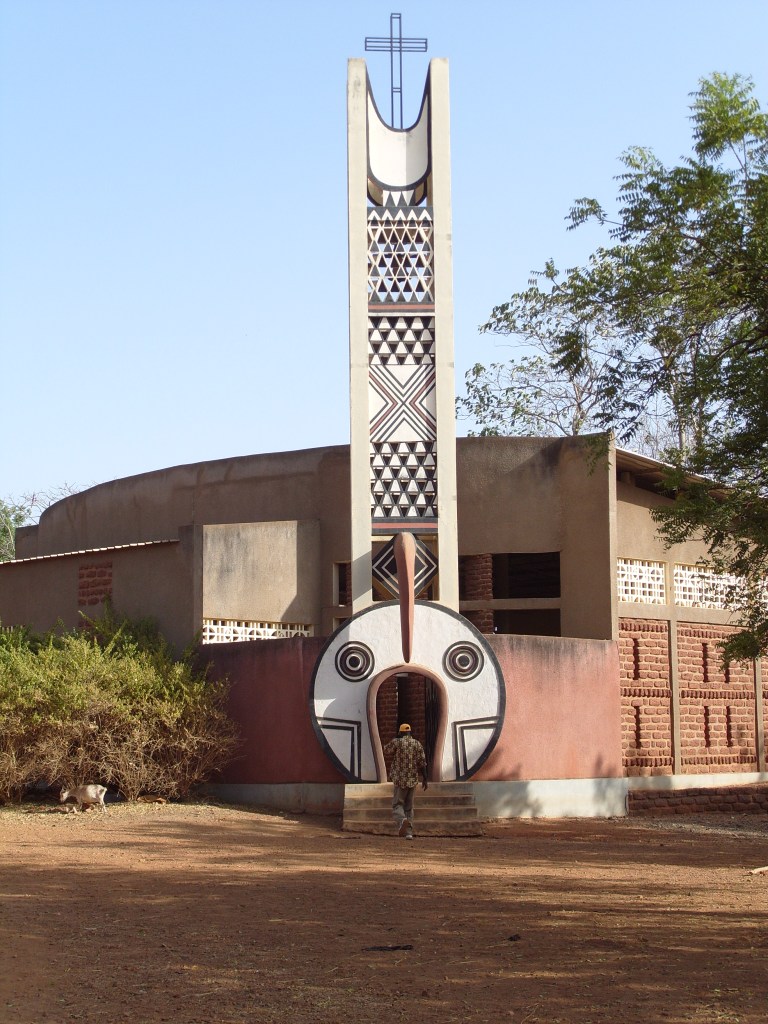
Pope Leo XIV traces his own heritage to Spain, Italy and France, and he has devoted much of his life, and ministry, to the people of Peru and Latin America more widely. He has chosen a name, however, with strong connections to Africa. He is an Augustinian Friar and Augustine of Hippo was also of African heritage, although from the northern city of Hippo, the modern city of Annaba in Algeria. What Leo brings together, therefore, is a global perspective, a European heritage, a North American birth, a South American mission and an African name. This again is important and significant in the contemporary climate and something that we should be celebrating.
My fascination with lions, and with Leo, also goes back to Africa, the place of my own birth and my own fascination with the continent and people of Africa. There are so many reasons, therefore, that a new Pope who chooses Leo as his name must, for me, be a good thing, with great possibilities for the future. I guess we can only wait and see just how this plays out and what this new Pope Leo has to offer the world, and the church.
 Martin Stringer Quartet