The End of an Era

Last week I attended the funeral of a dear friend. He was the parish priest of the church my partner and I attended whilst at university in Manchester. My partner also lodged at the church for a couple of years.

We were associated with the church for about ten years in total, from 1984 to 1993, during my partner’s undergraduate years, my postgraduate years and my subsequent work in the area as a church related community worker, before I got a post in the Department of Theology at the University of Birmingham. I am not sure that I would say that this was the golden age of the church.

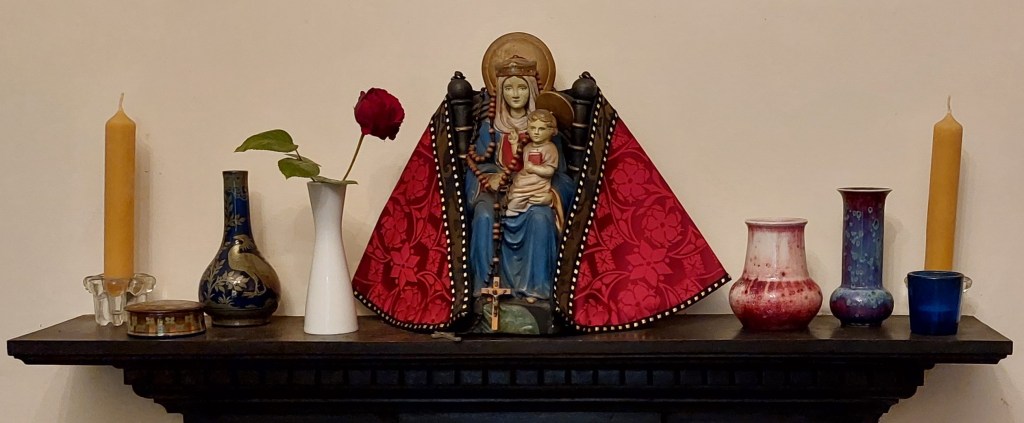
It was part of the tradition of Anglo-Catholic churches that were built in deprived parts of our major cities to provide support and faith, and a glimpse of heaven through the glorious worship of the church, for the people of the area. This was also a tradition that both my grandfather and great-grandfather had also been a part of.

Like so many of these churches the community had declined, in this case the old slum housing had been demolished, the people moved out and a scattering of new houses built with a mixture of people, moved in from different parts of the city. Many of the congregation had once been part of the parish but at the time that we were there they also travelled in. The church also attracted a small number of students who were drawn, like us, to the worship, the theology and the tradition.

I was honoured to serve at the church and, for much of the last five years, as MC (master of ceremonies) at the weekly mass and major festivals. The priest we knew retired in the mid 1990s and the church itself was closed a few years later, all part of the fall out from the vote for women’s ordination in the Church of England.

The priest, our friend, died just short of his ninetieth birthday and the community that gathered to attend his funeral was drawn largely from those we knew during our time at the church in the 1980s. There were a few from his current place of worship, where the funeral was held, and some clergy, both Anglican and Catholic, who had known him over the years. It was, however, meeting up with those we had known, and had largely lost contact with, over thirty years ago that probably left the most lasting impression on me.

We were all older, but I was still shocked by meeting a group of those who had all been children during our time at the church, many of whom had served with me, and who were now in their forties. I found it difficult to recognise just who was who. Many of those who had been part of the congregation have also died and I was very aware that those who had gathered were something of a remnant. This community, however, is unlikely ever to meet again and there was a strong sense, mentioned by a number of those I spoke to, of the end of an era, a final farewell to the church, its ministry and its people.

It was not just the end of an era for this particular church, however. The tradition that this church represented has all but disappeared from the Church of England. Practically all the churches that I knew from this tradition in and around Manchester have closed, been repurposed or demolished, and most of the clergy have either died or moved on.

There was already a sense, in the 1980s, that was a dying tradition. The priest whose funeral we attended always put this down to a decline in the teaching of the faith in the churches, a focus on the peripherals, the liturgy, the ceremony, the colour, the music, and an unwillingness to teach clearly what these elements meant and why they we so significant and so central to the faith.

In the nineteenth century, and the early years of the twentieth, clergy and people had had to fight to establish and maintain the Catholic tradition within Anglicanism. Many had turned to the new parishes of the inner cities, not just because of the call to serve the poor, which was significant, but also because the mainstream of the Church did not want them anywhere else.

From what had begun as an outward facing missionary tradition with strong emphasis on the social gospel, the Anglo-Catholic movement had become somewhat inward looking, obsessed with issues of authority and torn apart by the debates around women’s ordination and other matters in the wider Anglican Church. There were few, if any, significant leaders and fewer still that earned widespread respect within the movement. The writing was on the wall long before the vote in synod scattered the community and its tradition and marked the end of another kind of era within the church.

The funeral was held at the Oratory in Manchester. My partner and I attend the Oratory in Birmingham. There are some significant similarities between the Oratorian tradition and that of Anglo-Catholicism, and not only a shared devotion to St John Henry Newman and his work.

The Oratory of St Philip Neri grew out of a commitment to prayer and to the service of the poor of the city, in this case of Rome in the seventeenth century. Some of that tradition has been retained. The devotion to the liturgy, the need to use the very best in terms of music and art that in the service of the liturgy, is common to both traditions, as is the somewhat detached response to formal church authorities.

Some of the various Oratories in the UK today still exist in the more deprived areas of our cities but it would be difficult to say that ‘the social gospel’ is still a strong part of the current reality, although it is still seen occasionally.

It was fitting, however, that the funeral of our friend was held in an Oratorian church, with well performed liturgy, an incredible choir, and a recognition of the tradition. He would probably have appreciated it. And while the Oratorian tradition continues to thrive, at least in Birmingham, I still cannot help seeing the whole event of the funeral as an end to a very important era, in my life, and in the wider life of the church.

The Structures of Racism

I have just finished reading David Aaronovitch’s book on conspiracy theories. There is much of interest in the book and, especially in the present climate, it is very thought provoking. What is perhaps most interesting is that Aaronovitch takes the discussion back to the end of the nineteenth century and shows that the conspiracy theory is not something new or a product of the internet, let alone social media.

The element that stood out most, for me, however, was the recognition of just how deep rooted and how consistent the level of antisemitism has been for the last hundred and fifty years. What also struck me, was the way in which antisemitism has been constructed and, on reflection, just how different this is from the kind of racism that we see aimed at Black, African, Caribbean, or Afro-American communities.

One thing that is clearly common to all racisms is the construction of the other as less than human and the use of animalistic and crude naturalistic comparisons to dehumanise the members of a particular community. The names, the slurs, the hatred, is common to all kinds of racism and no one can be highlighted as ‘more’ or ‘less’ than any other. The differences that I saw in the way Aaronovitch constructed antisemitism are what I would describe as ‘social’ or ‘structural’ differences, the place of the ostracised group within society or the expectations of that place on the part of the racist speaker.

If I start with antisemitism, this has always had a fundamental contradiction at its heart. At one level the Jews are constructed as a despised and inferior people, the product of the ghetto or of peasant communities. On the other side they are constructed as wealthy, powerful, and plotting to take over society. The wealth or power may be ill-gotten, the product of magic and supernatural power, including the blood of babies etc. but the core document, which Aaronovitch skilfully unmasks and deconstructs, talks of a global plot among super rich and super powerful Jews to take over the world. Structurally, antisemitism is built on the idea of the enemy within, a group within society who, when not clearly distinct (and their perceived lack of assimilation in the ghetto/peasant form is transferred to the wealthy and powerful even where it patently does not exist in reality), then still placing loyalty to the group, the different, above that of society as a whole and, in extremis, intent on undermining everything that society (democracy/capitalism, call it what you like) stands for, again despite often being the greatest advocates of the values underpinning our western society.

The racism against the African, on the other hand, has its roots in slavery, but is also, undoubtedly, among the causes of slavery. Structurally it sees the other, the black in this case, as naturally inferior and subservient, reaching back in Christian terms to the story of Noah and his sons, and seeing the black races as born to be slaves of the white. There is no discourse in racism against the black that constructs the African or other diaspora peoples as superior, as wealthy, powerful or out to undermine Western society from within. Racism against those with African heritage is one of the powerful in society, the privileged, assuming (and constructing) a natural superiority that defines all black peoples as naturally lesser. This works even when those of African heritage take on positions of power. The only real exception could, arguably, be sport, but this is, in practice, simply an extension of the discourse of inferiority. Power, prestige, and superiority are all understood in all Western constructions as being intellectual, the power of the mind. When power is seen in brute physicality, it is equated with the animalistic and, once again, seen as inferior, lesser, naturally subservient, the beast of burden, when seen in relation to the intellectually superior white peoples.

The Jew, of course, is often constructed as being an intellectual, often too much so, using their natural cunning and superior, if twisted, intellect to dominate others. Once again there is an inherent contradiction in our structures of racism. The other can be either too intelligent or not intelligent enough. Both are barbs. Both can be used demean the other.

Islamophobia sits in an interesting position when understood in terms of the structures of racism. There are elements that place the Arab, the archetypal Muslim, alongside the peoples of Africa, perhaps a little higher, but equally inferior to the European, and on the same basis. More significant, however, is another structural type, not the enemy within, or the downtrodden masses brought in from outside, but the dirty foreigner. There is part of our construction of Islamophobia that is equivalent to the English ‘hatred’ of the French, or other Europeans (or even the Welsh or the Scots) and the American distrust of the Canadian, they are simply, and excessively, other. However, as Islam has become more embedded in our society, we can see elements of the structures of antisemitism creeping into our constructions of Islamophobia. The Muslims, we hear, are plotting to take over our society, to undermine our values, they are becoming a home grown other, a danger from amongst us, knowing us too well and using that knowledge, their intelligence, their cunning, their commitment to a greater Other that is not of us, to take over and to destroy us from within.

To understand, and I guess to challenge, racism, we need both to understand the history and the roots – these almost all go back into the middle of the nineteenth century, if not before – and to understand the structures and forms that underpin it. However, we must recognise that the many forms of racism that exist in our society have different roots, and very different structures, and we cannot simply compare one with another, or tackle all of them through the same methods and policies. Things are so much more complicated than many, particularly those at the extreme of politics – left or right, woke or extremist – would care to admit.

Negotiating University Growth

Throughout my time at Swansea University, we placed student growth at the centre of our strategy. There were very good reasons for this, but it also presented us with several very significant challenges. In what follows I want to highlight some of the lessons that I personally learnt from that experience.

We want to grow for two very clear reasons: –

First, to be seen as a truly global university we need to be able to offer a full range of programmes to an excellent standard and to be recognised as a leading player in research, not just across two or three disciplines, but across all the subjects that we offered. To do this, it was essential that we invested, primarily in the very best academics available, but also in the facilities we needed to support those people and the students they attracted. To invest we needed resources, and it is still the case that the primary source of income, for all universities, especially in the current climate, and the one that we had most control over, was that which we received from student fees and particularly the income derived from international student fees.

Second, and closely related to the first reason, was that the university needed to get into a position where we were financially sustainable. At our original size we were entirely dependent on contingencies and found it difficult to release funds to invest in student support, the estate, research support and other factors to the level that we would like. If we could grow, we reasoned, and therefore in overall income, we would know where we could achieve efficiencies (both in professional services and elsewhere) and therefore we could release funds to improve the services that are available, as well as providing resources to invest in new initiatives for the future. It was essential, therefore, that this growth did not just happen in an uncontrolled fashion, but that it was carefully planned and managed. This is what we aimed to achieve through the development of a ten-year strategy, leading to financial stability and sustainability and providing us enough head room, in three, five- or seven-years’ time to do what we needed to do to be the global institution that we aspire to be. That, at least, was the plan.

Growth, however, offers many challenges, even if the students are there to be attracted. Core to these challenges was the inevitable time lag between any immediate growth in numbers and the subsequent investment needed in staff and student support. We were committed to provide the necessary investment in those areas where growth was planned and was seen to be at its strongest. However, it was not always possible to predict precisely where these were going to be. Beyond this, however, there were three other, more specific challenges that I want to recognise, and to offer some insight into what we did to meet them.

The first is that there are always limits on growth that is focused simply by doing more of the same. Many programmes across the University were already reaching the limit of the numbers they could achieve (either because of the number of students available, or because of practical limitations internally). Growth in these areas, while still possible, is always going to be marginal. We recognised, therefore, that growth demands doing new things. This may be through new programmes (new masters and undergraduate programmes within existing subject areas, linking with institutions overseas in joint or dual degree programmes, or developing whole new areas such as Chemistry and Education at Swansea). This was planned through the annual Business Planning Round and each College was asked to produce a list of new programmes that it was intending to develop over the next five years. This could never be fixed in stone, and we were always open to changes in the market and to initiatives from individuals who saw opportunities for development. It was the role of the Programme Management Board, however, of which I was chair, to manage this process and to oversee the strategy for growth through the development of new programmes.

The second challenge comes in delivery. Class sizes will inevitably grow, there is a premium on space, across both campuses in Swansea, and there is inevitably a limit to what is possible unless we begin to take significant action to plan well in advance. Building work will never keep pace with the growth in student numbers, but that is only an issue if we assume that the growth will only come through doing more of what we already do at present. Teaching is changing. New technologies are opening up new possibilities. Students are engaging in learning in very different ways to the way they did when I started out in this profession. Learning technologies, however, are not a simplistic answer to all our problems of growth.

We do need to recognise the changes that are happening and the ways in which new technologies can help to improve the learning experience of students, while also perhaps challenging our need for lots of time spent in large lecture theatres or in individual face to face interactions. There are also things can be done structurally, in terms of the academic year, changes to regulations, rethinking assessments etc. that can both bring benefits to student experiences while also enabling us to manage larger student numbers more effectively. At Swansea the Go Beyond project was aimed, in part, at looking at all these issues and we explored several of the options that were available.

The third challenge, however, is student support. We all recognise that the stresses and strains on students are probably more significant today than they have ever been. We need to be aware of the impact of all these policies on the student body, and we were always very grateful at Swansea University that we were able to work alongside the Student’s Union as we aimed to address these impacts. Student support, however, in terms of personal tutoring and fundamental welfare provision was among the first things that we reviewed during my time at Swansea. We worked with the Student’s Union, academic and professional services staff, to put forward a strategy and proposals that radically rethought this area of our work, providing a much clearer view of what academic tutors were expected to do, for example, and attempting to provide the appropriate support mechanisms in terms of both welfare and academic skills that were necessary to underpin the anticipated growth. I am not entirely sure, however, that we always got this right.

Clearing was something that Swansea University always did well, and I have great memories of the way the whole team, the whole university, pulled together to make that work. Growth in student numbers happened, practically every year, and it offered us many exciting opportunities and challenges. The whole University community was involved in, and committed to, the recruitment process and were fully behind our objectives. But this was the kind of work that never seemed to stop. Each year we all had to work together, to reflect on the challenges, and to see how the next few years could be transformed into opportunities to develop new ways of working and new opportunities for our students. Growth in student numbers never did answer all our problems, but the work we did to tackle it, and to learn how to cope with it, certainly made for a better university.

The Fickleness of Scholarship

This is the first of four blogs that will allow me to look back on the different threads of my quartet. It has been about a year since I began this blog in earnest, and so I thought this would be a good point to reflect and sum up something of where I have arrived.

Religion, the first of the four strands, is what I research. Religion is what I write about, and it is what I have been writing about for thirty or more years. I have five books to my name and numerous papers, enough to make sure I am recognised as something of a leader in my discipline. I have written the sixth book and have spent the year trying (unsuccessfully) to get it published. I am currently writing the seventh (on stories and on myth as I have mentioned many times in these blogs). However, I somehow feel as though I am just at the start of my career and that I am, after almost ten years in senior leadership roles, having to make an academic name for myself all over again.

I am currently reading a wonderful thesis from a Lebanese scholar, Rima Nasrallah, who achieved her PhD from the Protestant University in Amsterdam in 2015. It is a study of the worshiping lives of women in Lebanon who have grown up Orthodox or Maronite and have married men who belong to the Lebanese Protestant Church. This is a work that is based on ethnography and that has a real eye for detail within the daily lives of these women as they negotiate their various liturgical traditions. I would highly recommend it, I can immediately think of three colleagues to whom I would have liked to send a copy for Christmas, and I will certainly be using it in teaching later in the year.

This is a thesis about the ethnography of worship, and it is a study of lived religion. These are both areas in which I have written, and they are both areas where I would like to think of myself as something of a pioneer. None of my books, however, appear in the bibliography. That does not worry me as such. Rima is not dealing with quite the same areas of experience that I was writing about. However, in both cases Rima references other works that have become recognised as the founding texts of these two sub-sub-disciplines, other writers whose work has, in some way superseded my own.

Earlier in the year I helped a colleague at the University of Birmingham to teach on a course on Lived Religion in Birmingham. The course itself is the direct inheritor of a very similar course that I taught in the years before I left Birmingham, also in 2015. What is interesting, however, is that my own work was completely overlooked in the previous version of the course and the two books that are most directly related, one on lived religion and one on religion in Birmingham, were not included in the bibliography.

I can prove, very easily, that the work done by the student in Amsterdam has a direct line of descent from my own writing, through the work of colleagues in the Netherlands, Rima’s supervisors, who have always recognised their debt to my work. They are now the leading exponents of this kind of approach, and I am proud of the part I have played in supporting them and encouraging them to develop far beyond my initial exploration of this world. Likewise, the course in Birmingham, is a direct inheritor of my previous work, both in the department and in the city.

The work that is quoted, in all these cases, as the core texts and perhaps even the founding mothers and fathers of the sub-sub-disciplines, were texts that were being written at about the same time as my own books, and in most cases in the States. These were career academics who continued to write, to attend conferences and to publicise their work. This is related to what has been called the ‘Matthew effect’. Once one person has quoted them, others follow, quoting them in turn as the definitive work, and so it continues. The texts that surrounded them and that often inspired them have therefore largely been forgotten. You can see that happening throughout the history of scholarship. This has enabled certain scholars to be established as the ‘founders’ or ‘core texts’ of the discipline. I am perhaps just a little surprised at how quickly this has happened in this particular context.

So, do I want to rebuild my reputation, shout from the roof tops ‘look at me’, ‘over here’, ‘it is my ideas that you are using!’? No, I don’t. Scholarship moves on and I continue to be very proud of the very wide range of scholarship, in the UK, in the Netherlands, in Scandinavia and even in Australia, Canada and the States that my own work has made possible. I am not looking for recognition in that sense.

The point for me, here and now, however, is how to move forward. Because I am no longer being referenced, it is much more difficult for me to get published. Once I get back into the machine, however, with a book in publication and a series of papers based on collaborations and conference presentations then I will hopefully be back in circulation, and I can begin to plan out the next stage of my goal.

Lived religion, still less the ethnography of worship, was never what I wanted to be known for. Both are simply steps along the way. The reason I stepped back from my role at Swansea University was, in part, to give me the space and the time to get back to that bigger project, the development of a ‘general theory of religion’. That may also sink without trace, almost inevitably so, in time. However, I do believe there is something of value to be said about the nature and working of religion. I have written three volumes of this already, I am working on the fourth, and I will continue to work on the other volumes that go to make up the general theory over the next few years. Only five more volumes to write so I had probably better get on with it…

The Trigan Empire

The surprise gift this Christmas was a copy of Tales from the Trigan Empire, a large comic, or graphic novel, volume published in 1989. This is clearly not the kind of thing that I would normally read, but it brought back so many memories of childhood. When I was eleven or twelve (1973-74) my parents subscribed to the children’s magazine Look and Learn and each week I devoured all the different, undoubtedly educational, articles within it. I always left the best bit till last, the back cover, which contained the next instalment of the Trigan Empire. I do not now remember anything about the content of the magazine, except for those images, drawn I now know by Don Lawrence, and of those I remember only one of the stories (but more of that later).

The Trigan empire is essentially Rome with added technology, a kind of ultimate steam punk taken way beyond the Victorian era. The costume and the social context are Roman. The technology is, or was, somewhat ahead of the contemporary with atmospheric flying craft, hover vehicles, space travel and ray guns. The stories were heroic and always had a happy ending, although they could spread over many weeks with serious scrapes and cliff hangers from week to week.

What attracted me was inevitably images of hunky young men in short skirts. This was an entirely homo-social society. It was clearly misogynistic, although to be fair women were simply absent, and even in the book version there are only two or three female characters. The heroes end up, very briefly, in one story in a society ruled by female warriors, but otherwise the women, with one exception, are bit parts or entirely absent. The only woman with anything like an important role is the daughter of the chief scientist, philosopher, and inventor of the Empire.

Having no women there is also no romance, no love interest, no distractions from the heroic activities of the key players (the emperor, his brother, his nephew and the nephew’s companions in the imperial air force). The villains, and even most of the monsters, as far as one can tell, are also entirely male. This is not homoerotic, apart from the images. It is not erotic at all and does not hint of relationships of anything other than friendship between the core group of companions. This is original boys’ own stuff, boys who were not expected to be interested in girls, or at least not yet.

The stories are also implicitly, and often very explicitly, racist. Even in 1989, when this book-long version was published, it all looks very dated. True, the leading figure, Keren (the emperor’s nephew’s best friend) is always coloured blue and has dark hair. He could, at a push, be seen as ‘black’. The emperor and his family are all blond haired and clearly white, if not distinctly Aryan. It is, however, the enemies, the ‘savages’ and ‘barbarians’ beyond the Empire, and even the peasants within it, who are represented in very stereotypical fashion (more Middle Eastern rather than from the far east or Africa). In this it also, perhaps, represents a ‘Roman’ attitude to the other. Those within the Empire, of whatever ethnicity or colour, could be Roman and a citizen of Rome, while those beyond the borders of the Empire are barbarians and somewhat less than human.

So why has the Trigan Empire stayed in my memory? Partly, I guess, is that I was reading it at a very impressionable age, the age for which the stories are clearly written. It had heroism, adventure, risk, hand to hand combat, evil villains and monsters, technology and style. All this made a strong impression on me and many of the images have stuck with me. But it is the one story that I remember that probably has much to do with the lasting memory.

I was not a fast or prolific reader as a child. Dyslexia meant these graphic narratives became more significant. I was also never allowed to read real comics (Batman, the Eagle or whatever) as my parents didn’t think that they were intellectual enough. It is rather ironic, therefore, that the one element of the (obviously intellectual) magazine that they did buy for me I appreciated, and remembered, more than any other was the comic strip on the back. However, this was also one of the few arenas, before the age of about thirteen when I did take to books in a big way, that I engaged with narrative and story, and so with the intellectual ideas that were contained within those stories.

The story I have always remembered is not contained in the volume I received for Christmas. It moved away from the emperor and his family and started with man in a crowd who buys a lottery ticket from another man in the crowd. The lottery ticket, inevitably, wins and the man who bought it gains a great fortune. The person he buys it from is furious and starts to stalk the winner, discovering in the process that he has invented time travel. I forget how the story concludes, what was needed to destroy the time machine, or whatever else might have happened. It undoubtedly had a happy (distinctly moral) ending, all these stories do. What has always struck me, however, was the stark expression of the dangers, and possible benefits, of time travel. I was undoubtedly watching Dr Who at the same time, but that did not have the same immediate impact.

It was the written/drawn form of the story that fixed the idea in my head. The wider frame was also significant, the imaginative leap to a Roman society with contemporary technology. This also raised interesting intellectual questions and narrative possibilities. It has always been the ideas contained in narrative, their implications, variations, multiplication etc. that have interested me, and, it appears, I probably learnt much of that, for the first time in a conscious fashion, from the stories of the Trigan Empire. It is good to be reminded.

The Pleasure of Reading J G Frazer

Having just completed the third volume of J G Frazer’s thirteen volume version of the Golden Bough, I have to say that I am really enjoying it far more than I would ever have imagined. I don’t think I could read all thirteen volumes one after the other, but with a short break between them to read other things, it is something of a pleasure to get back to Frazer.

Frazer is, of course, a great writer when he wants to be. There is an incredible amount of repetition and attention to detail, lists of examples that just seem to go on for page after page, but when he begins to focus on one aspect of the wider narrative or another, and to tell a story, or to paint a picture (often fanciful and highly romantic) of some tradition or another, then the language begins to soar and I am caught up in it all.

It is not just the language, however, that draws me in. I know that so much of the theory, the ideas that attempt to bring the whole text together, are idle speculation. At some point, as I work through the other eleven volumes, I will no doubt address that in more detail. I also know that he is dependent on half understood tales from non-specialists, each with their own motivations and biases, of events and ideas from across the world. There is little here that you could safely rely on as ‘ethnography’. Finally, Frazer is a colonial figure, an evolutionist, and a racist. Ideas that are clearly offensive in today’s world permeate the text and its language in a way that sometimes does make it difficult to read without getting utterly annoyed and angry.

Despite all this, however, I find the flow, the accumulation of ‘fact’ and the slow building of evidence to be captivating. There are probably two or three things that do appeal to me. The first is the knowledge and evidence from the classical world. I know this far less than the ethnographic material that Frazer quotes between the classical examples. I guess that if I did know the works he is referencing, then I might find this material just as problematic as the ethnographic work. The interpretation of the texts is probably way off the mark. I do not know whether, as evidence of any particular practice, it is a correct interpretation or not. I guess the examples are highly unlikely to reflect any real practice, at least as Frazer has interpreted them.

Again, it is not the detail, the factuality, that appeals. It is the recognition in Fazer’s writing of complexity. There is a very real sense of a diverse, complex, and constantly changing ancient world, with very few fixed points. There is no sense of simplification in this text. The work begins with a particular ritual, in a specific place, just outside Rome, and it expands out to take in so much of the rest of the ancient world. Communalities are recognised and celebrated, but always with difference and always with local variation and colour. Even in one place things are seen to change and to evolve. There is a fluidity to the reality that Frazer is describing that I have to say that I did not expect. I have no idea how accurate it is (I know the ‘pre-histories’ are entirely speculation, either Frazer’s or that of the authors he is quoting) but the variety, the complexity, and the sophistication of ancient ritual (it is not ‘religion’ that is being looked at here, but that is another story), I find fascinating.

More broadly than this sense of complexity, however, it is the way in which Frazer is consistently changing focus that I find most appealing. Frazer’s work is often described as ‘comparative’ and there is a long debate about the value, or otherwise, of comparative analysis (be it of religion or any other elements of culture). Frazer does not address that. He simply takes it for granted that the comparative method can produce interesting and provocative results. However, beyond the comparative, it is the way in which Frazer moves from the detailed, tightly focused analysis of a specific ritual, story or religious context, at one moment, to a broad-brush speculation on what it is to be human, at another. He is clear that one or other of these approaches can never be enough in and of itself.

The detailed analysis may be based on limited evidence, and even on misreadings. But it is, within the limitations of its own time, detailed, disinterested and part of a real attempt to understand and express what is going on, often from the participants own point of view. There is a recognition that this is a different world, a different thought process, a different understanding of reality from that of the reader, and Frazer does his best to make it explicable and even ‘familiar’ to the reader. He does have an eye for detail, and it is this, I would suggest, that underpins the sense of complexity that I get from the engagement with the classical literature and ethnographic examples.

On the other hand, however, Frazer’s focus can quickly move onto the larger, or even the largest, stage and he can begin to bring together large quantities of data, from many different sources (never questioning of analysing the sources as such) to make bold and challenging statements about the way humans engage with nature, with the world as they understand it, with each other, and with spiritual forces. It is the balance, the tension between the detail and the comparative that I find so compelling, the constant movement and flow in ideas. It is surprisingly easy to follow (so long as you have a good memory for pages and pages of specific examples) and each section is carefully constructed. As a reader you feel that you are being led on a journey that is at times looking at the details of a particular rite or village and at others opens out to vast, expansive views. It is exhilarating, and while it may all be absolute twaddle, it is a masterpiece of extended academic writing, perhaps even of nineteenth century myth making.

Is the Doctor a Vampire

The other night I woke up in the middle of a dream about Dr Who. I have no idea what the narrative of the dream was, but the question that stuck in my mind, as I woke up, was whether the Doctor should be seen as a vampire.

This may not be quite as odd as it sounds. Russell T. Davie’s relaunch of the Doctor, with David Tennant, has just completed on television, with the third episode released over the weekend. I have also been enjoying the revisioning of Anne Rice’s Interview with the Vampire over the last few weeks. So, I guess both experiences have got themselves a little confused in my mind.

I love the Dr Who series (all of them, without preference) and over the last however many months that I was at Swansea I watched the whole of the new cycle through on catch up, one a night for however long it took. It was great to see how the various themes and motifs played out over time. Having recently watched the last episode of the latest series, live as it were, then Dr Who is certainly a firm fixture in my head.

Likewise with vampires. As part of my work on myth I am reading what I can of histories (mostly popular and polularist) of vampire literature, films, and other forms. In the first version I ever gave of my thinking on myth, a series of lectures to first year students on the Introduction to Religion module at Birmingham University, one of the lectures was on the ‘natural history of the vampire’ and that model has stayed with me and should have a place in book that I am currently writing.

What this section would consist of, effectively, is a brief (and unscholarly) outline of the development of popular narratives on vampires from the mid-eighteenth century to the current day. This begins with the vampire as a local person who has died in unusual, often violent, circumstances, a person who is known to the victims and whose existence only really lasts a matter of months till the corpse is dug up, mutilated or burnt.

The story then transforms, through romanticism, into the aristocratic loner and immortal figure seen in Bram Stoker’s Dracula, followed by many copies, especially in sensational theatre productions and the early films. In the mid-twentieth century the vampire moves from its lonely, isolated existence with the growth of communities, or even whole societies of vampires, and what might be described as ‘vampire culture’. Ann Rice, and the first film of the Interview is important here.

Finally, towards the end of the century, the vampire gets a makeover, often becoming vegetarian, but essentially emerging as the love interest and the romantic hero. Of course, the ‘history’ is far more complex than this, and others have set this out in much more detail, and with much more sophistication. It is not the details of the history itself that concerns me, however, rather the way in which a narrative theme can transform over time, driven both by social circumstances and by the natural selection of what appeals to the popular imagination at each transformation of the subject.

The other interest of the vampire narrative is the way in which key themes or motifs remain central and keep recurring despite the transformation of the plot. There is a code associated with vampires, their habits and the factors that help to control them. These do change over time, and it appears, across space, but the fact of a code is one of the constants that drives the narrative itself. It is the knowledge about the habits of the vampire, and knowledge of how to destroy a vampire, that is often central to the plot.

A final question, however, comes with the definition of a vampire. What distinguishes vampires from other forms of horror? The vampire is essentially a dead human person. That rules out some other forms of monsters, or transformations of live humans, such as werewolves etc. The vampire is physical, the body of the vampire is the body of the dead human, and so clearly not a ghost or a spirit. The vampire also retains something of the personality and intellect of the human person, so distinguishing it from zombies and other related creatures. Finally, the vampire preys on living humans, most commonly by drinking blood, but sometimes by sucking out their soul, and slowly draining them of life. This allows a sub-set of vampire narratives in which a living person acts in a vampiric way, preying on another living person and draining them of their life, reducing them to a shadow of their former self.

It is at this point, I would suggest, that we come back to Dr Who. We could talk about the loner, aristocratic element of the Doctor, something that relates directly to the classic narrative of the vampire (as does the dress sense in many cases). The Doctor is also, like the vampire, eternal and becomes the Doctor through transformation following death. There are already hints, therefore, that make an association of the two somewhat plausible. Many episodes, or story lines, also work on the principle of life, or energy, that is sapped and misappropriated, usually by the villain, in a very vampiric fashion.

However, there is also a constant sub-narrative in the Dr Who series, which sees the enemies of the Doctor accusing him of being a destructive force for evil in the universe, leading to the deaths and destruction of many lives and many civilisations. This is often taken very personally by the Doctor, leading him/her to challenge their very identity and purpose in the world.

One element of this, less often stated, but highlighted specifically in the most recent episode, is the relationship between the Doctor and their companions (an essential part of the Dr Who narrative as any code is for vampire narratives). In this relationship the Doctor gains vitality almost at the expense of the companion. This is not often seen within specific episodes, or even over complete series, but the very fact that the companion is ultimately disposable, being left at the end of each manifestation of the Doctor (and often returning having an ambiguous relationship with newer versions of the Doctor), can be seen as the Doctor using up the life force, the enthusiasm, even the life of the companions in an essentially vampiric relationship.

Perhaps that is pushing things a little too far. The Doctor for me will always be an ambiguous being, that is part of the joy of the series, and something that is well understood by the writers, but would I go as far as to see the Doctor as a ‘vampire’ in absolute terms? Perhaps not. It is just as a rather interesting exercise in narrative topology, and I like the idea of playing with the possibilities. That, and asking what the hell was really going on in that dream?

The Akan Doctrine of God

I have just finished reading Joseph Buakye Danquah’s book on the Akan doctrine of God. This was written in 1941 and first published in 1944. It was part of a larger attempt to bring together the thought and ideas of the Akan people but much of the rest of the text was destroyed in a fire. The version I read was republished in 1968 with an introduction by Kwesi A. Dixon. It appears to have been republished as an e-book in 2013 and the same edition has been republished a couple of times in more recent years.

At first sight there is nothing remarkable about this book and it has certainly not gained great notoriety or even, as far as I can see, much of a position in the history of African thought. Danquah is better known for his political opposition to Kwame Nkrumah, the first president of Ghana. However, as an anthropologist who has written about the Dogon this book about Akan thought raises all kinds of rather interesting questions.

Marcel Griaule published his most famous book, Dieu D’Eau, or as the English translation titles it, ‘Conversations with Ogotemmêli; An Introduction to Dogon Religious Ideas’, in 1948. This book is well known and is almost always referenced, usually alongside Placide Temples La Philosophe Bantoue (1949) as being among the first texts to present an African philosophy (although both Griaule and Temples were, of course, European). These two works have, interestingly, often been regarded as the starting point for an approach to African philosophy that is based on proverbs, what is often considered in the literature as the quintessential form of African thought.

Griaule’s work is also critiqued for developing the mythic thought of one elderly, blind, hunter, and passing this off as the ‘deep thinking’ of the Dogon people, that which is only ever achieved through many years of initiation. This is not what Griaule was doing, or what he ever said that he was doing. In the text Griaule simply presents the ideas as those developed spontaneously over a series of nightly conversations with the blind hunter Ogotemmêli. Griaule never claims that these are anything more than the reflections of one man, what he refers to as the equivalent of a theologian in Western society. Reflections that are certainly rooted in the traditional thought of the Dogon, but not in any sense a definitive statement of that thought.

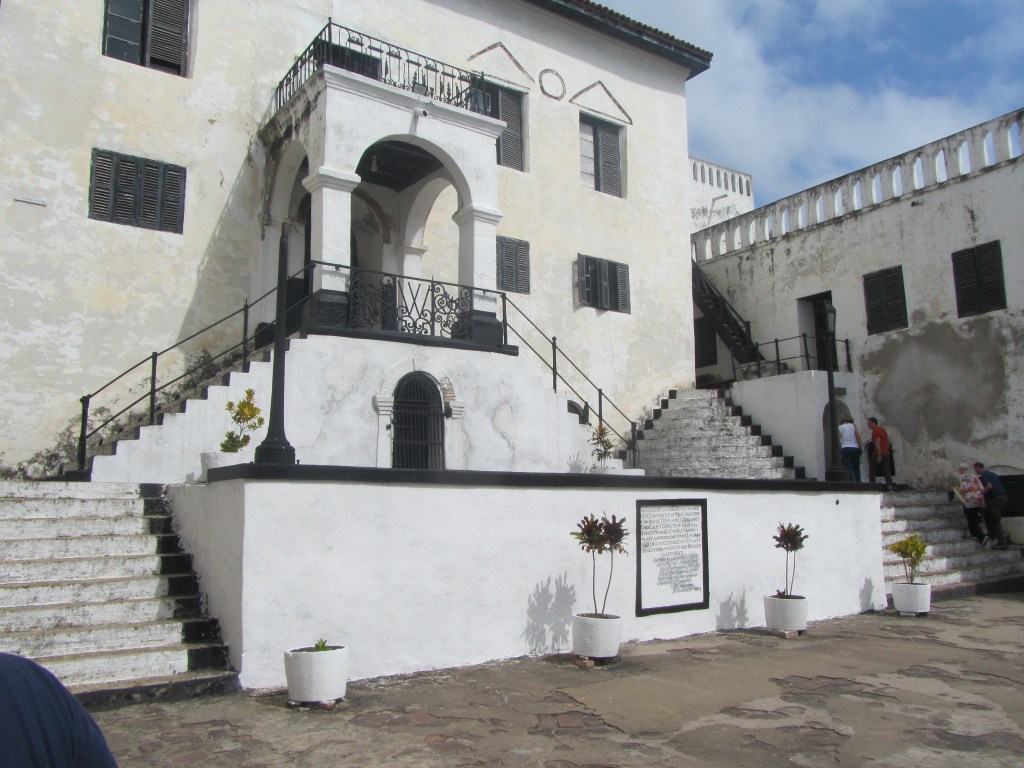
Some five or six years earlier, however, another African philosopher was setting out, in a written text of his own, the religious, philosophical, and primarily the ethical thought of his own people, the Akan of Ghana. There is a world of difference between Ogotemmêli and Danquah, and between their texts, but the two men were reflecting on the deeper things in life at much the same time and only 1000km apart. Many young men among the Dogon at the time also travelled regularly down to Ghana, or the Gold Coast as it was then, looking for work. The two worlds are not all that far apart.

There are probably many reasons why Danquah’s work has not had the reception that perhaps it should. Dixon in his introduction suggests some, including the fact that Danquah does not present a very recognisable version of Akan religion, ignoring the important role of lesser deities and placing the emphasis on a monotheistic high god, who is known in three aspects. This suggests that Danquah may have been trying to make Akan religion sound like Christianity. Although, if he had wanted to do that, I think he would have made more effort to do so. He understands Christianity and highlights many similarities, as well as many differences. It is the ancient Arcadian religions of Iraq and Iran that Danquah looks to as the closest relation to Akan religious thought, but that might also be another reason why his work has lost its credibility.

More significant, I think, is the way in which Danquah places Akan thought alongside and in dialogue with Western philosophical traditions. He was educated at University College London and his own writing is deeply rooted in the Western tradition, from Aristotle to Hegel to more recent English philosophers. This is the language that he draws on to present his understanding of Akan religion, its understanding of God, and its ethics. This is a highly intellectual tradition. Danquah is clear that just as there is a tradition of Greek thought, and a tradition of Hebrew thought (which are not the same in his view) so there is also a tradition of Akan thought, and each of these has something significant to offer to the wider, overall, thought of humanity. In his presentation the contribution of Akan thought is primarily its rejection of original sin and the working of humanity towards the goal of goodness, as exemplified in the nana, or head of the family, tribe, nation or people.

Danquah is also not afraid, or embarrassed, to use the writings of earlier anthropologists working on the Akan as important sources on the thinking of the Akan. He does question some of their conclusions, particularly the derivation of words and their understanding of language, but he does not question their right to attempt to present Akan thought and welcomes the fact that they have provided an important starting point for his own thinking.

What is also interesting, however, is that Danquah’s own ideas are firmly rooted in proverbs, far more so than Ogotemmêli’s ever were. Proverbs are a core carrier of ideas and values among the Akan. This is one reason some Western commentators believe that they are important across Africa, which is not the case. However, it is often the same commentators who are desperate to build ‘African religion’, most clear expressed in the Ubuntu tradition (more of which, perhaps, at another time), on the ‘traditional thought’ or African peoples, traditional thought that is often generated, perhaps even created, by Western anthropology. E. E. Evans Pritchard is often credited with offering the first full presentation of ‘African religion’ in his book on Nuer Religion (not published till 1956) but once again this is worlds away from Danquah’s presentation of the religion of the Akan.

So yes, this is a very interesting book, even if much of its content would not be entirely relevant today (Danquah does not recognise a world in which religion has no place, whether in Africa or the West!). It is certainly a book that should be remembered and celebrated for what it is.

Coming Out and Coming Out Again

When asked to write about my ‘coming out story’ shortly after taking up the position of PVC at Swansea University eight years ago, my immediate response was to ask ‘which one?’ I have perhaps been lucky, I never needed a big coming out event. Being gay is something I have always taken for granted and accepted as being part of me. My parents never had any serious problems with it, and, while I did have a long conversation with Mum, my Dad simply adjusted to the fact that ‘Martin has a boyfriend’ and that was fine. I have never in that sense deliberately ‘come out’ and yet I have found, over the years, that coming out is a continual process, something that has to happen in some shape or form every time I meet new people and want to them to understand who I am and to accept me for who I am.

This struck me particularly when I took up my role as Pro-Vice Chancellor at Swansea University. Before moving to Swansea I had been working in the University of Birmingham for over twenty years and most people who bothered to take an interest in these things knew that I was gay and had a partner. I taught on a module on ‘feminist, black and gay theologies’ for a number of years within the Department of Theology and Religion. Gay and lesbian students felt comfortable approaching me to discuss issues relating to sexuality, whether personal or theological and I appreciated their trust and openness. I mentored a number of gay or lesbian staff and students as part of formal LGBT+ mentoring schemes, and my partner was well known to immediate colleagues.

Being gay, therefore, was something that played no significant role as I increasingly took on management roles and moved up the University structure. I do remember, however, the mild look of surprise on the Vice Chancellor’s face when, having been appointed to a senior leadership position, I introduced my partner to him at an event organised for senior management to which my ‘wife’ was included on the invite (the University did not make that mistake twice!).

Having taken up my new role at Swansea, however, I was, perhaps for the first time, in a position where I have had to make a deliberate decision about when to ‘come out’ and how to do this. My standard response has always been to treat being gay as perfectly normal and to wait for conversations to reveal that normalcy. Many people asked me ‘have you got a family?’ The answer is ‘yes, David, my partner, two dogs, however many tortoises and a couple of chickens’. Others ask ‘are you moving to Swansea?’ and I have to say that it is unlikely in the short term as ‘my partner runs a business that would be very difficult to move across the country’.

Very occasionally somebody apologised as if they have trodden on delicate ground, but for the vast majority the conversation simply continues, discussing the particular breed of dogs (otterhounds if you are interested) or specific issues around the antiquarian book trade. It is not a ‘big deal’ but I was perhaps more conscious of it on that occasion simply because of the very large number of new people that I met over the my first six months in post. ‘Coming out’, in that sense, never really stops, and now I have left Swansea and I am moving into new engagements and activities I can begin to see the situation emerge again. The only difference now is that I do tend to take the initiative. I make it clear that I am gay, have a longstanding partner, and this is part of who I am even before I am asked.

I do have to say, however, that the openness and welcome that I received in Swansea all those years ago made that process so much more pleasurable and reassuring. The support, and perhaps even the lack of any special interest or recognition that I was any different, has also been very significant. A university is, perhaps, a particularly positive place to be ‘out’, but I am also finding that in many other contexts being gay is not a big thing. Other people are less likely to make assumptions, and, as I said at the start of this blog, I know that I have been very lucky in this, and I remain very grateful.

Another Tragedy for Armenia

My partner and I have been passionate about Armenia for many years. We love Armenian music, Armenian art and architecture, the romance of the Armenian church, everything about Armenia, its history and its people. It is with great sadness therefore that we have been watching the news over the last week or so and seeing that, once again, the Armenian people are suffering and nobody, or practically nobody, is coming to their aid.

We have travelled to Armenia on two occasions, and twice to parts of eastern Turkey that have strong Armenian links. On our first trip to Armenia we travelled on to Georgia and I was very struck by the fact that all the stories we heard in Armenia were tinged with tragedy, not just over the last hundred years, but throughout its history, while those told in Georgia were stories infused with joy, if not directly with comedy.

The Armenian genocide, commemorated in a wonderful museum and monument in the heart of Yerevan is a moving and defining narrative for all Armenians. A whole population being slaughtered and driven out of their homelands in what is now Turkey, with many hundreds of thousands dying on the way. The current movement of people from Nagorno Karabakh holds memories of the genocide, but thankfully with far fewer casualties. I guess we can be thankful, even for small mercies.

A friend of ours lives in Gori, down by the border with Azerbaijan, and in the previous war he was very aware of the closeness of Azeri forces, the bombing and the shelling. That was a tense time, especially in his concern for his elderly mother and whether he would have a house to return to. Now the town is overrun with refugees, and everybody is welcoming strangers into their houses, doing what they can to support those fleeing from the aftermath of this most recent war.

On our second visit we travelled over into Nagorno Karabakh, or Artsakh as it is known to Armenians. The lasting memories for me were to look out over the border into Azerbaijan and see a town abandoned on the border, and also to visit the graveyard in the capital, Stepanakert, and see that all the graves of the soldiers, each with a picture of the man who had been killed, and to note that they were all much the same age as myself. That was very sobering, as was the daily reports of soldiers being wounded or dying in clashes on the boarder that never really ceased.

The land, however, is not just a series of villages and farms. We also visited ruins and monasteries that told of many centuries of Armenian history. I am sure that there are other monuments that tell of the histories of others who have lived on that land. Under the USSR there was a mixed population, neither completely Armenian, nor completely Azeri. In the war that followed the demise of the USSR, with Turkey supporting Azeri troops and the Russians backing Armenia, the process of ethnic separation, and ethnic cleansing was begun, each side calling on the doctrine of self determination to claim the land for their own people.

The Armenians predominated in that first conflict and, with the aid of Russian peacekeepers, the Armenian population of Nagorno Karabakh sought to develop their own republic, to practice self-determination. That was only ever going to be possible, however, with the tacit support of Russia. Turkey backed Azerbaijan and armed them in the most recent attacks. And now Russia, partly because of the distraction of Ukraine, partly because Armenian politicians have looked to the west and have had the courage to condemn Russia, but also partly because Russia is seeking to curry favour with Azerbaijan, the support and the protection that had been offered by Russian troops has disappeared.

As so often before in their history, therefore, the Armenians have become the pawns in much larger political movements, and have suffered as a consequence. There have been times in their two to three thousand year history when they were dominant in the area, if only for short periods. However, like all the other peoples of the region their lands have been fought over by larger empires, and despite brief periods of ever hopeful independence and self-determination, they have generally been crushed once again, so leading to their deep-rooted sense of tragedy.

Tragedy, however, does not mean lack of hope. Armenians have spread across the world, and we have attended churches in Manchester, London, Paris, Thessaloniki and New York. They have a strong sense of identity and great hope for the future. Events such as those of the last week or so, however, can do nothing to lift the mood of tragedy and sadness that is such a significant part of their history. Our most recent visit to Armenia coincided with the centenary of the genocide in 1915 and I always recall the text that accompanied the logo for the centenary ‘I remember and demand’.