I am Approaching Sixty: Thinking about the Creative in Myself.

I am currently reading two rather bizarre and somewhat eccentric travel books (and yes, I always end up reading more than one book at any one time, it comes with living in two different places). The first is Rose Macaulay’s Towers of Trebizond. The opening sentence, with its reference to both high mass and camels, had me hooked. The second is David Fanshawe’s African Sanctus. My father introduced me to the music of African Sanctus, I have a feeling that we might even have seen it live, but I really cannot remember that. It is the recording (an LP) that has stayed with me, the combination of African, Arabic and Western music that grows out of Fanshawe’s travels around the gulf and the northeast of Africa. It might even have been my first introduction to African music, but whatever it was it was the combination of Africa, and the Latin text of the mass, that really hit home, not to mention the sheer enthusiasm and the rhythms that drive through it.

Fanshawe’s book is so much more than an account of the music, or even of the travels that inspired it. It is in part a fantasy – framed as a trial of the composer by the witchdoctor in Northern Kenya – and it is in part an autobiography, from school days to the production of the African Sanctus itself. Fanshawe tells how he came to music, and particularly composing, late, in his twenties. He was never a ‘budding composer’, he did not even think he was a very good composer, but his piano teacher saw something of genius in him, and he persevered. He is still not convinced, as he writes the book, that he is very good, but he is certainly sure that he is a composer (and a ‘potato’, but that is another story).

I am approaching sixty and as I look back, I sometimes wonder what might have been. I wrote my first opera at the age of ten (and while it was nothing to write home about, to give Dad his due he did encourage the other kids at school to sing it through and learn the parts!). I started to write a novel at age twelve (inspired by War and Peace of all things) but never got beyond the opening chapter (which mum thought had promise, although she admitted that she didn’t think the hero was anything like handsome enough). At secondary school I studied neither English nor Music partly because those were my sister’s strengths and my parents did not want us to compete, partly because of my dyslexia, but primarily because the school structure and timetable ended up forcing us to choose between the sciences and the arts, and at that stage I found science easier.

At university, however, I wrote a symphony and took it to some Professor in the Music Department to look at. He realised that I had had no training in music, but he was really impressed that I had thought through a whole structure for a symphonic work. He suggested that I should get to know the work of Steve Reich and two or three weeks later I sat next to the composer in a concert of his music at the Royal Northern College of Music. It blew my mind, but also perhaps convinced me that I was probably never going to be a composer.

Somewhat later, as a local community worker and part time member of a local amateur dramatic society, I showed a play that I had written to the director of the play we were currently working on (Ibsen’s Ghost). She was very kind, read it through, and then pointed out that it had no ‘drama’ and while it was very well plotted, did not really engage with the emotions. As with music, I was somewhat disillusioned and chose to concentrate on the day job.

Incidentally both ‘experts’ as well as commenting on my ability to handle plot and structure, also noted that there was one element in both works that was entirely impractical. The play needed a dead body to lie under a table throughout the whole piece. The first movement of the symphony needed all the bass instruments to play the same note as a constant beat in an extended funeral march for fifteen to twenty minutes. I am not sure now that I would take the fact that my work was ‘impractical’ as a reason to give up. The fact that I had no training in music and/or drama and did not have the basics of the craft was, however, a serious drawback. I did not, therefore, do what Fanshawe did and take negative criticism as a call to work harder and learn the craft, to prove to the Professor and the Director, that I could, in fact, write music and/or drama.

Not, that is, until I am turning sixty. I know that I will never be able to play music well. My fingers won’t let me do that, not to mention the issues of reading music with dyslexia, and a total inability to stay in tune. I will never make a good, or even a moderately passable, actor. I will never fully grasp emotion, drama, and character. I don’t do ‘emotion’ and although I have never been diagnosed with autism or any related disability, I do recognise a great deal of the autistic in my engagement with others.

What I do very well, however, is structure, pattern, and plot. Building an extended piece of work from a few simple principles gives me the opportunity – if I do learn about the basics of putting notes together in a meaningful fashion, or of writing simple, clear, and powerful language – of writing symphonies, novels, plays and goodness only knows what else (more than a few eccentric travel books as well I am sure). Perhaps retirement is the right time to think about this. It is certainly about time that I sought the creative in myself rather than (or perhaps as well as) spending my life encouraging the creative in others.

Playing with the Big Boys (and Girls)

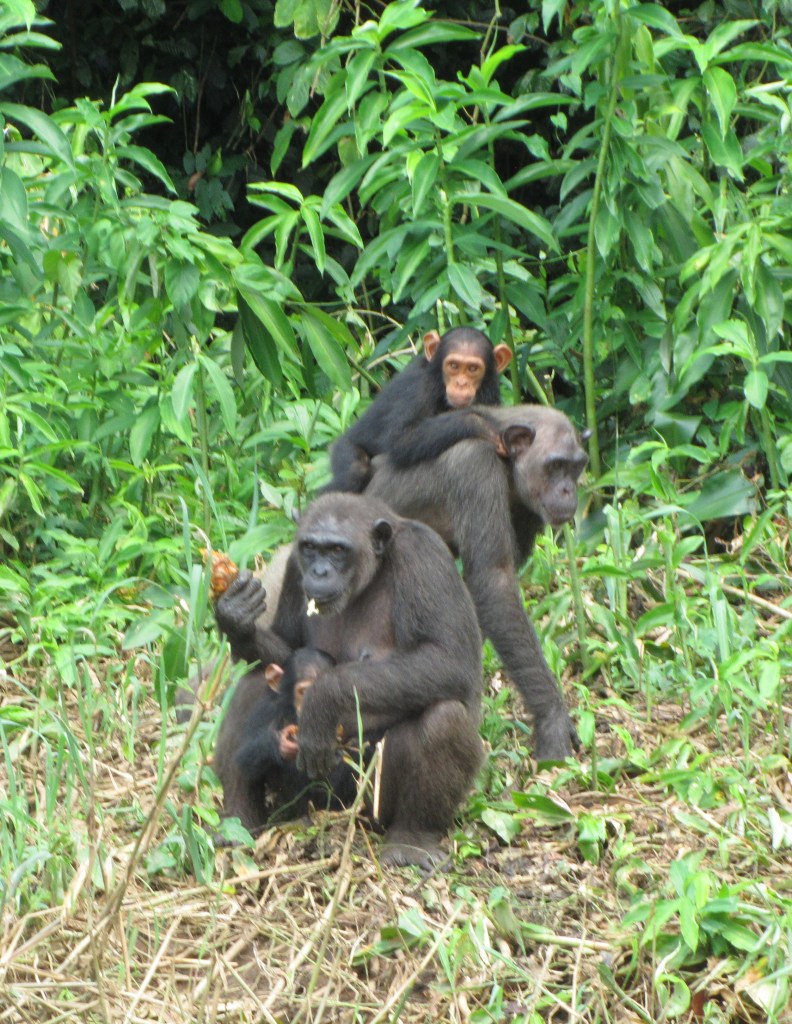
Last week in the Life Scientific on Radio 4, the interviewee spoke of his early career following troops of chimpanzees in Uganda. He was particularly struck by one young male, who was named Jingo. This chimp was not particularly large, but he was fast, and he played a particular role in the hunting parties of the group. As a fast, young, agile male, Jingo’s role was to chase the prey (usually monkeys) through the treetops and, because of his size and speed, he was usually the first to arrive at the kill.

Normal chimp behaviour suggested that at this point Jingo would either start to eat the kill, which would have been a challenge to the dominant males, or make a point of subservience and protect the kill until the dominant males arrived to claim it. Jingo did neither. He stood back and allowed all the chimps, and particularly the younger males and females, to have their fill of the kill before the dominant males finally arrived to find nothing left. The dominant males, the big boys as stated in the interview, were often furious at this turn of events but there was little they could do. Meanwhile Jingo picked up a following among the younger males and females and, while he was never big enough to challenge to big boys directly, ended up leading the troop for many years through what can only be described as careful political manoeuvring.

Apart from giving a really interesting insight into chimpanzee behaviour this story struck a particular chord with me because so much of my own behaviour and activities within the University have followed the path as set out by Jingo.

In almost thirty years of work within a university setting I have always been very conscious of not being able, or willing, to play with the ‘big boys’. I am fundamentally opposed to the macho approaches to management and would not contemplate competing with those who engage in this activity on their own terms. I was significantly bullied while at school and learnt very early on to match aggression and violence with an offer of help and support. I won the bullies over by ignoring their threats and offering to help them in their schoolwork, or otherwise, making myself somewhat essential to them if they were to avoid the humiliation of the school system. In doing that I am fully aware that I probably endorsed their violence and did little to challenge the system itself.

In moving to a university lecturing role bullying once again became very visible, directed at myself on occasion, but more commonly at my female colleagues or others who were less able to defend themselves (or who cared more for the consequences) than I ever did. On only one occasion did a line manager threaten me directly with adverse consequences if I did not co-operate in a culture of bullying. That person did not last long in the job as I found other ways to have them moved on. Taking on particular individuals, however, does not, of itself, challenge the system that from the mid-1990s through to the current environment, has always been dominated by what might be called ‘the big boys’ and increasingly also by the ‘big girls’. And it is always the case that these dominant, and dominating, individuals always seem to end up getting to top jobs and the significant roles within the university.

My policy and practice in this environment is not dissimilar to that of Jingo, and the story of his rise to power, and methods of achieving that power, resonated immediately with my own story.

I am not sure that I would really describe myself as either ‘quick’ or ‘agile’ in any physical sense, but intellectually and particularly politically I have often been able to side step, manipulate and outwit many of those who have competed with me for senior academic roles. I rose through the ranks of academic leadership relatively quickly at Birmingham, taking advantage of restructurings and the uncertainty that these created to position myself in a series of ever more significant roles, ending up as acting PVC and Head of the College of Arts and Law. It was not so much the means by which I was able to achieve that rise (largely a case of being in the right place at the right time) but what I would always do to consolidate each step up that ladder that was significant, and which relates more clearly to Jingo’s narrative.

I used each position, director of learning and teaching or head of department/ school/college, to support and enable others. That has always been my way. It is not necessarily a deliberate policy and to describe this action as a political strategy probably gives it far too much weight. I would always support others, encourage them to develop their skills, fight their corner when I had to, and provide opportunities for growth and development. I have always felt that by encouraging others to flourish things develop and grow within an institution, where bearing down on them, demanding compliance and measuring against an increasing number of KPIs will only diminish and discourage and lead to conformity and stagnation. It has not always been easy, however, to continue that policy within a culture where compliance, micromanagement and KPIs are still the dominant mode of authority.

As with Jingo, sharing the spoils of the hunt, in my case supporting peers and those who I have been responsible for, has always led to tensions with the ‘big boys’ who expected me to play a very different game, and has also led to significant popular support that I have been able to use at times as leverage against the big boys in order to develop my own agenda. I have survived a number of attacks from those above (or more commonly around) me and, by many criteria, I have thrived and carved out a very successful career for myself in university leadership. Having reached a certain point in that career, however, I am not really sure whether the practices and policies that I have followed will now take me any further.

Unlike a troop of chimpanzees, the major difficulty with the university world is that the various ‘troops’ or institutions, are connected, and it is not just a case of rising to the top within a sealed political unit. If the top jobs in the university were handed out on the basis of the wishes of the staff, something perhaps a little more democratic than we currently have, then I could well have been in a good position to retain, or gain, a leadership role above the one that I now have. However, that is not the case. It is always possible for the big boys, or girls, to move between institutions and the macho leader is still (even in these days of EDI and more ‘humane’ management) a preferred candidate. It is not the staff of the institution, the members of the chimpanzee troop, who have to be convinced, it is other ‘big boys’ and ‘big girls’ on Councils and Senior Leadership Teams. They are still, to a very large extent, playing the game of league table performance and management by KPI, something that I have considerable experience of, and an unenviable track record in, but something that ultimately is not in my nature. I still feel like the smaller – albeit more agile, and more politically astute – contender, and I am not at all sure I will ever, now, get that top job where a real difference can be made.

Celebrating Easter 2020

Just before Easter I had a zoom conversation with a Muslim professional. He said that he had read that I was a man of faith and therefore asked how I was going to celebrate Easter. I replied that Easter was the highlight of the Christian year, more so than Christmas, and that it was a season that I had always enjoyed. Not least, it was the arc of the liturgy, over four days, taking us through the story of the death and resurrection of Jesus, that I found most inspiring. I wished him well for Ramadan and Eid and we both agreed that it was a change to have the opportunity to talk of faith in today’s world.

Now, on the Tuesday after Easter, I realise just how privileged and honoured I am to have been able to celebrate Easter at a church that continues to use the extraordinary form, the unrevised Latin rite from 1962. Unlike many in the congregation I do not believe for one moment that this is the only form that should be used. I am not particularly committed to it theologically or ecclesiologically. I just find it so much more satisfying, ritually and liturgically, than any of the modern alternatives. And, as with any liturgy or worship, from whatever tradition, when it is undertaken with commitment and enthusiasm, in the best possible way that it can be celebrated (with full complement of clergy and servers, with a professional choir, and with all the relevant beauty and dignity that could be employed) then it creates an experience of holiness and worship that, for me, is beyond compare. While the Easter vigil, for example, took two and three-quarter hours, it was, in my view, perfect and a fitting celebration of the depth and complexity, emotionally and spiritually, of the feast.

I don’t share what I assume to be the very conservative moral and social values of many of the congregation at the church I attend, but I would not expect to differ on any of the essentials theologically. The sermon on Easter morning, drawing out the biblical allusions to bread, wine and the lamb from the first Passover meals, through the Last Supper, to Jesus’ words on the Cross was a wonderful expression of core of the Catholic faith. I think it is sad that the Pope has chosen to conduct a campaign against the conservative wing of the Church through their commitment to a particular form of liturgy. I am sure there is nothing in the rite itself that the Pope can find objectionable, it is those who choose to use it as a badge if identity, and opposition to current trends in the Vatican, that he appears to have difficulties with. As I say, I think this is sad, but I am still grateful for the opportunity to worship using that rite in a church that does it so well.

On Easter morning I also listened to the liturgy from Canterbury Cathedral as broadcast on Radio 4. It was the Archbishop’s sermon that has caught the headlines and created controversy, asking once again whether church and politics meet. I have no objection to that sermon and support much of what the Archbishop was saying. A very different sermon to that in my own church, but equally profound and theologically appropriate. My difficulty was with much of the rest of the service. It appeared to seek ‘relevance’ in a way that led it to be almost humanist in tone. There is, of course, a place for humanism in the church, and perhaps in the liturgy. However, in my view not at Easter, when we celebrate what God has done for us, not what we have done for God, or for each other.

Where I and many Muslims would probably be in agreement is that the worship of God is not about ‘relevance’. Whether that worship is in Latin or Arabic is not important. It is an attitude of devotion and subservience to the power that created us, loves us, and brought about our salvation, that is pre-eminent. That demands a certain detachment from the things of this world, a glimpse of heaven, as the Anglo-Catholic slum priests of the early twentieth century East End churches would stress. It is the ability to take us out of ourselves and present us with something totally other, utterly divine, that worship comes into its own.

And I am clearly not the only one who thinks like this. At a time when church attendance continues to decline across all the denominations, the church I attended over Easter was full every day, Maundy Thursday, Good Friday, Holy Saturday and Easter Sunday, congregations of two to three hundred, and much to my surprise, different on each day. There are, of course, some regulars, and the weekly Sunday liturgy has itself maintained a full church every week since the end of lock down, but over the feast there were clearly people who had travelled in from miles around to share the experience, to worship in the traditional ways, and probably some new people, returnees who remembered something of this in their childhood, whether in the UK, or in Poland or other European, Asian and African nations, but also young families who believe this is the right environment to bring up a new generation of Christian youth. There is something here that is clearly attractive, and clearly not only to me.

Happy Easter, and may the peace of the risen Lord be with us all…

Once Upon a Time

As I begin this blog, I have just finished reading Tomoko Masuzawa’s In Search of Dreamtime, The Quest for the Origin of Religion. So, what better place to begin than on origins.

Masuzawa wonders at the way in which the modern study of religion has rejected the nineteenth century obsession with origins as an explanation of religion, often violently denying the possibility of ever grasping the ‘origin’. Alongside this rejection of intellectual, or scientific, or literal origins, however, Masuzawa notes that the thing that has no origin, religion, or more correctly, myth, is itself defined by its focus on origins (at least in Eliade’s reading of myths). So while the academic purifies themselves from the taint of origins, the people the academic is studying, the religious, or the myth makers, are seen to be obsessed by origins.

In the book Masuzawa presents a series of close readings of the work of Durkheim, Muller and in particular Freud, showing that, for each author, their particular obsession with origins is not, in fact, all that it seems. In each case the origin that is identified is not in fact the real origin of religion, it is a gap, a fiction, a dream, a transference of the sign. The book is highly theoretical and written in a very clever and sophisticated analytic language. Essentially, however, the origin of religion, in the writing of each author is itself presented as a kind of myth, the home of ‘origins’, that exists not in historical time, but in the time of once upon a time.

As I was reflecting on this work, and the ideas that were circulating throughout Masuzawa’s book, my mind kept coming back to the idea of time and of origins as a form of explanation. Post modernism, we are told, saw the death of the grand narrative, the idea of a teleological understanding of history, or progress. As such it must also have seen the death of origins, playing, as Lyotard puts it, in the ruins of history, but ruins that never were a building, and never were built, that had no origin. Without progress there is no end, and likewise, no place to start, no origin worth mentioning.

One area where this is very apparent in today’s world is in the whole field of identity politics. The emphasis on ‘identity’ sits almost at odds with the concept of ‘origins’. Identity is about the hear and now, about my feelings, my imminent response to my sense of being. It is entirely about the present, even to the point of rejecting, and wanting to overturn, history. This is glaringly obvious in terms of Trans identity, which points to a reality that is felt by the individual at a fundamental, essentialist, level, to the point that origins, sex at birth, has to be denied and even destroyed, often with a violence or vehemence that it terrifying to the observer. The same principle, however, can be seen in all identity politics, the felt reality of the now always trumps any critical view of the past, and origins become irrelevant in the play of self-construction.

The point, however, is not that there are no ‘origins’ in identity politics. It is the rejection of origins in terms of historical narrative time that is at question here, origins in terms of the structures imposed on the individual by their past, by history, by society. Identity is found in a different, much deeper, and much more personal form of ‘origin’, what it is to be fundamentally the self, the person I am today. Narrative is still essential, but the starting point is not biology, or sociology, or even history, it is not who I was, it is much more meaningful, it is who I am, in the here and now, and in my very being, a more fundamental kind of origin, the origin of my sense of self.

Of course, there is far more to identity politics than the simple denial of origins, and this is a topic that I will inevitably come back to time and time again within this blog.

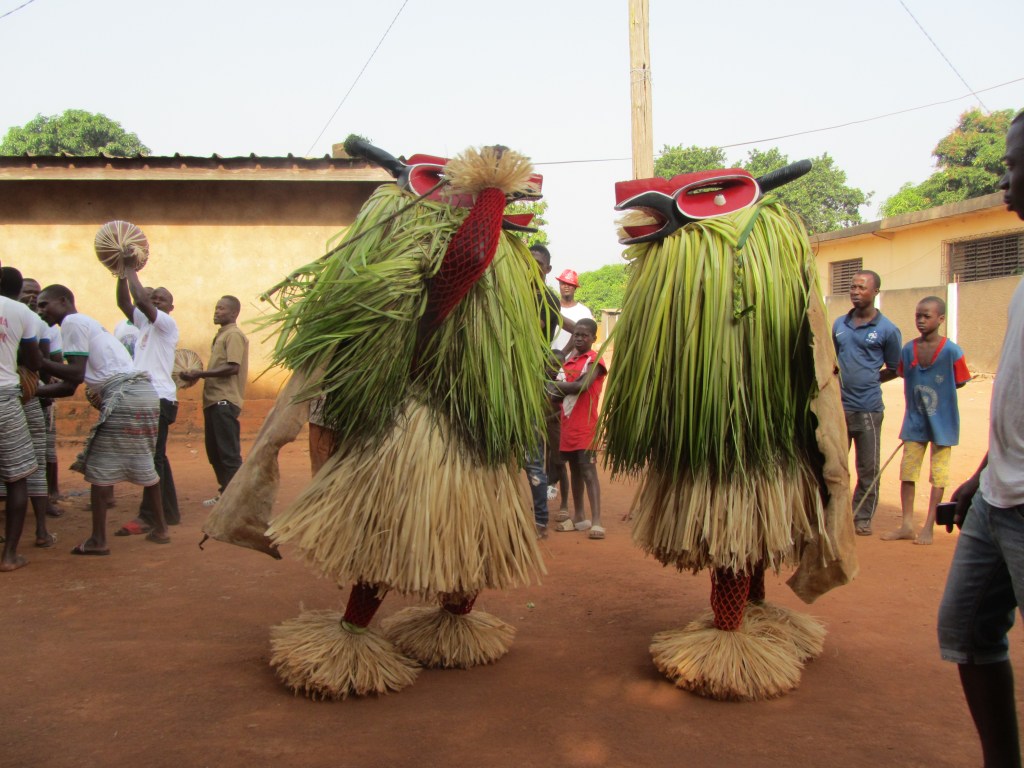
In the book that I am just completing, on the academic appropriation of the Dogon from Mali in western thought, I end the final chapter by noting that my approach has been rigorously historical. I track the ‘history’ of the anthropological discourse on the Dogon, the history of the art historical discourse on the Dogon, the history of the popular appropriation of the Dogon and the history of the tourist discourse on the Dogon. In doing this, however, I have noted, throughout the text, the importance of myth, and narrative, to the Dogon themselves, or perhaps more accurately to those who write about the Dogon. I ask therefore whether even to write a history of the appropriation of the Dogon in western thought is itself an appropriation, the use of western analytic methods (history) to represent a people who do not think in those analytic frames about themselves and their world. I ask what a mythic presentation of the Dogon, as presented by the Dogon, might actually look like.

In asking this, however, I find myself back inside Masuzawa’s somewhat circular argument. Myth, in Masuzawa’s perspective, and that of Eliade before her, is all about origins. Western academic writing rejects the mythic narrative of origins, even perhaps denying the validity of such analysis in disciplines such as post-colonial studies. And yet history, which must be about origins if it is about anything, is the western analytic frame that I am seeking to reject in place of mythic reflection. Is this any more than rejecting one statement of origins, one form of myth, for another statement of origins, another form of myth? Or is it, perhaps, recognising that all forms of academic analysis, all forms of explanation, are ultimately little more than once upon a time?

And so I begin: Once upon a time…