We have just come through the league table season, with the Guardian, the Times and even the new look TEF, each offering their versions of the best universities in the UK. On LinkedIn and elsewhere colleagues are finding the numbers that position their universities in the best light and telling the world that they are ‘number one’ in … whatever it is, or in the top ten, top twenty or whatever it is, in this, that or the other league table.
Swansea University was always very good at league tables, and I leant a great deal from colleagues about how to make the most of the different scores and how to crunch the figures in a way that would give us the best outcomes. League tables are important to student recruitment, and to morale, but it is not entirely clear whether what they are measuring is really ‘excellence’ as so many people assume. It may be one kind of excellence, but it is only that form of excellence that the press, and the marketeers, have chosen to highlight.
Meanwhile the press, and government ministers, also peddle the idea of ‘mediocre teaching’, of a ‘lack of student engagement’, of ‘mickey mouse degrees’ and substandard outcomes. The NSS scores, which underpin many of the league tables, continue to demonstrate that across the sector student satisfaction with both teaching and student engagement remains as high as ever, despite all the changes to the process, with no universities doing dramatically badly. Other surveys do raise questions about the student’s sense of ‘value for money’, aspects of student mental health and other concerns, but it is difficult to turn these into a message about ‘mediocre teaching’ or substandard outcomes. All this talk of failure and mediocrity is simply a useful line to justify the government’s inaction and to appeal to a particular section of the public (whom, it is assumed, are not positive in their view of universities).
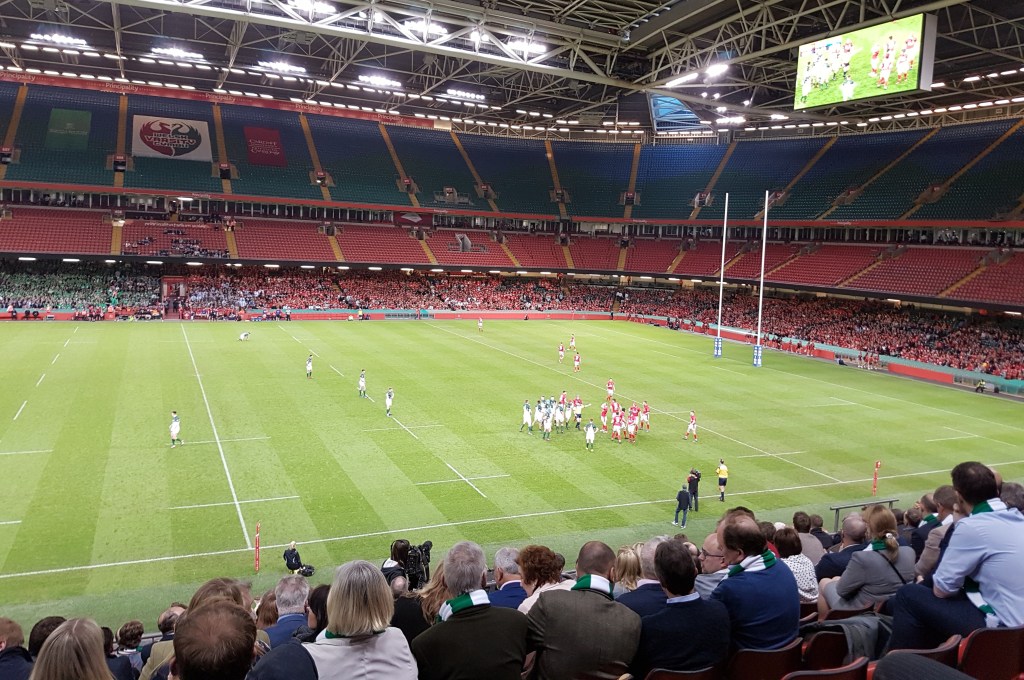
Many of my evenings over the last few months or so, however, have been spent with one eye on the incredible sporting achievements of the summer (not least the rugby, which I never thought I would get really excited about before ending up in Swansea!) and one ear on the Proms, both outstanding examples of excellence in practice. While we can, both as individuals and as nations, take great pride in these achievements and they clearly lift the morale of the community, we do have to recognise that in each case we are talking about a very small elite in terms of the excellence of practice.
I could never aspire to excellence in sport. I would find it very difficult to identify a sport where I would even be considered ‘mediocre’. That does not mean that I do not enjoy watching it and do not recognise excellence when I see it. Whether it is the Women’s football, tennis, the current rugby world cup or whatever else, it has been thrilling to watch people at the very top of their game compete and achieve. I can get caught up in the thrill of losing in the final as much as anybody else.
The Proms are perhaps a slightly different experience, at least for me. I do understand music. I did conduct ensembles and play the french horn up to university and have always appreciated the best performers over a wide range of the classical tradition. The various national youth orchestras that played during the proms were thrilling, raw enthusiasm matched with outstanding talent all working together as a single unit. And, as always with the Proms, there have been several individual performances that have simply taken my breath away. Again, this is excellence, demonstrated by those at the very top of their profession and that can be recognised by all.
Few of us are going to be ‘excellent’ in this sense, at least not in sport or music (although it is clear that we did have some very talented individuals around the campus in Swansea and it was great to see how we could provide the opportunities they needed to do their very best). Throughout my teaching career, my students have always been very generous in their feedback, regularly rating my teaching as excellent and on various occasions nominating me for awards. Teaching is in my blood (many of my wider family are teachers) and there are few pleasures greater than watching students explore new ideas, grasp difficult concept and begin to think critically and creatively for themselves, often outshining me in the development of their ideas. This is something I missed as a senior leader, but the same kind of thrill can often happen as I watched colleagues and those around me develop and achieve in their own particular field.
Research is much more difficult for me. It does not come naturally. Being dyslexic, writing was something that I have had to work very hard to develop. I had many rejections, false starts, poor reviews etc. as I have tried to improve and to see exactly where I was failing. Excellence in research and publication is not something I can ever take for granted and I have had to work very hard to understand enough of the discussion to be part of it, to communicate what it is that I want to say and to be recognised as one of the leading figures in my own field. Reviewers now tend to comment on the clarity and readability of my writing, which I find very rewarding, and I know that my theories and ideas are being taught in Universities from Melbourne to Stockholm, Amsterdam, Edinburgh, New York, Chicago and San Francisco, to name only those courses that I am aware of. I do believe in excellence, therefore, and do believe that we can, and should, all aim to be excellent in our own chosen field.
Perhaps that does mean that there will always be some mediocre teachers within the University, and some mediocre researchers. These people are almost always excellent at other things; be it student engagement, writing research grants, or whatever else it might be. As with sport or music, while we can, and must, recognise the outstanding talent of the few, we must also recognise that that talent does not exist in isolation. The few that we see performing are often part of a wider team or ensemble, but they are also supported and enabled by a much wider team of technical, scientific, medical, coaching, and management staff who make the individual performance possible. Above all, therefore, it was in recognising the role that we all played, the combined effort, that allowed Swansea University to take pride in the excellence of our staff and our students and to celebrate that excellence whenever we saw it and recognised it.
 Martin Stringer Quartet
Well said and yes Swansea has a lot to be proud of
Jill
LikeLike